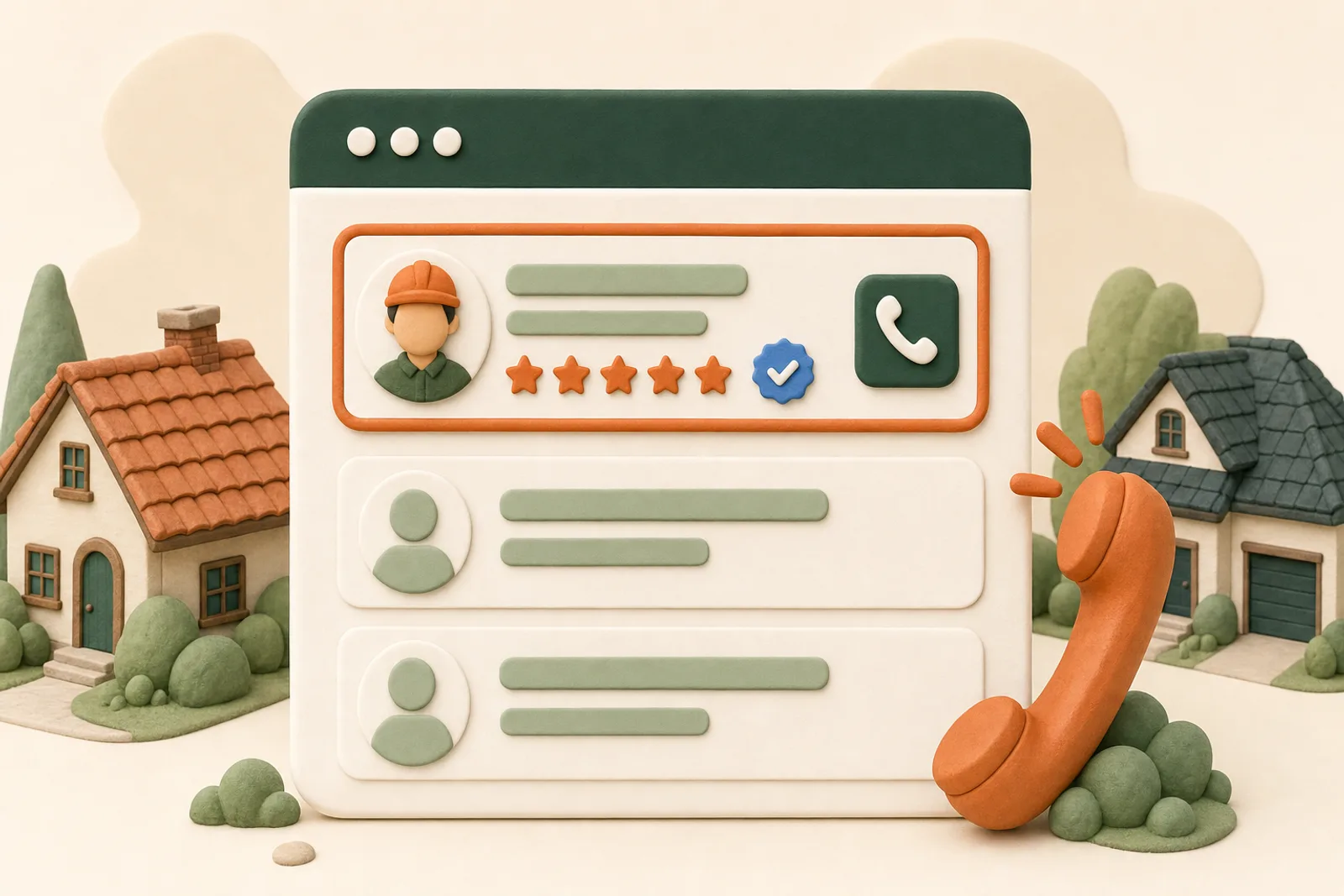

Local Services Ads are the boxes above everything else on a local search: photo, rating, badge, phone number. For roofers they are usually the best-behaved paid channel in the arsenal, and also the one whose rules have changed most in the past year, which means most advice about them is now partly wrong.
Here is the current, sourced picture: what roofing LSAs cost, what Google requires, what you actually pay for, and the two changes (one live, one coming in August 2026) that most guides have not caught up with.
What LSAs are, mechanically
Unlike regular Google Ads, LSAs charge per lead, not per click, and there is no published price list. Google’s bidding documentation explains the mechanism plainly: “When similar local businesses bid on the same lead, those bids determine how much the lead is worth. You only pay when you get a lead.”
For roofing specifically, the only published trade-level numbers come from an agency dataset across 100+ LSA accounts: roofing averages about $162 per lead, the highest of the home services trades measured, businesses claw back 6 to 7% of spend as credits, and over 90% of leads arrive by phone. Phone leads from a screened listing close well, which is why the channel earns its place despite the price.
The screening: what the badge takes
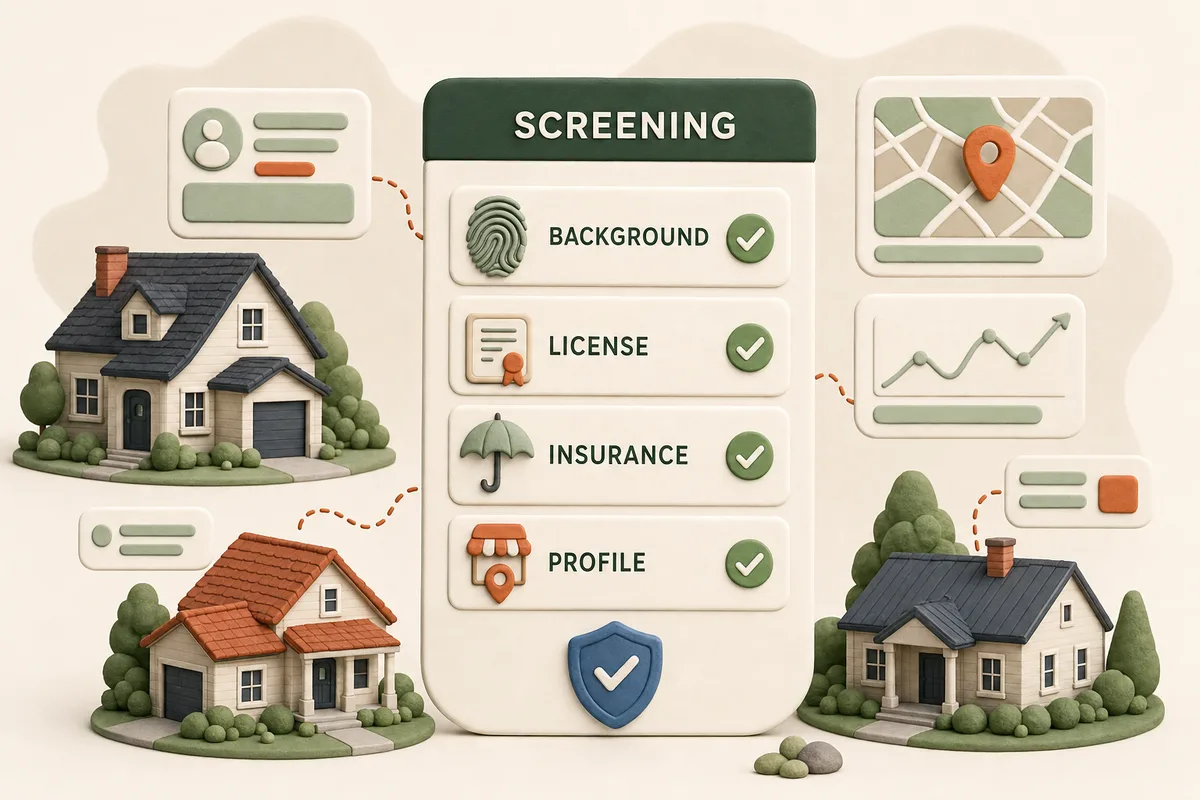
You cannot simply buy your way in. Google’s screening documentation requires every advertiser to pass verification, and the US requirements for roofing specifically include business and owner background checks, state-level business license verification, general liability insurance, and this prerequisite most roofers miss: “Local Services advertisers must have a public and verified Google Business profile.” Your Business Profile is the foundation of your LSA presence, not a separate project.
The screening is a real moat. In most markets it thins LSA competition to a fraction of the roofers bidding on regular ads, which is part of why the channel behaves better.
The badge change most guides missed
If your current marketing advice mentions “Google Guaranteed,” it is out of date. Google’s announcement: effective October 20, 2025, the Google Guaranteed, Google Screened, and License Verified badges were replaced by a single blue “Google Verified” badge, and, more materially, the consumer Money Back Guarantee was discontinued with it.
What this means for a roofer: the badge still signals screening, but the “Google will refund unhappy customers” pitch that agencies sold alongside LSAs no longer exists. Any provider still selling it is describing 2024.
What you pay for, exactly
Google’s lead documentation defines the chargeable events precisely: an answered call with the customer, a voicemail from the customer, a text or email, a returned missed call, or a booking request. Know the list, because it is the audit trail for every dollar.
Crediting changed too. Under the automated system, invalid or low-quality leads “are not charged” or are auto-credited on reassessment, “in most cases within 30 days.” Two operational notes from the same docs: Google no longer supports credits for job-type or location mismatches (the old dispute standby), and credited leads still show the original charge on your invoice, so read statements accordingly.
The August 2026 migration
The bigger structural change is scheduled: Google is migrating US home-services LSA accounts into Performance Max campaigns with pay-per-lead goals starting August 2026. You will still pay only for valid leads, but manual bidding, including setting a maximum cost per lead, is being deprecated in favor of automated targets, and historical LSA performance data does not transfer.
Translation for a roofer budgeting the second half of 2026: the hard per-lead ceiling you may have relied on is going away, so watch the first post-migration invoices closely and set target costs deliberately rather than accepting defaults.
Where LSAs fit in the plan
The honest frame from the full lead-cost scorecard: LSAs are rented attention with the best manners. Screened competition, per-lead billing, phone-heavy leads, roughly $162 a unit. That beats shared marketplace economics soundly and undercuts regular Google Ads’ $228 benchmark for most roofers.
What LSAs cannot do is compound. Every lead costs the full price forever, and the moment the budget pauses, the boxes go dark. That is why the durable structure pairs them: LSAs (and the Business Profile they require) carrying immediate flow, while SEO builds the asset whose cost per lead falls every quarter. The budget framework sizes the split.
Want to know what LSAs cost in your specific market, whether your screening prerequisites are in place, and how the August migration will hit your account? Get a free audit and I will map your paid and organic picture together, with the numbers.
Frequently asked questions
- How much do Local Services Ads cost for roofers?
- There is no published rate card: Google sets lead prices by competitive bidding among similar local businesses, and you pay per valid lead rather than per click. The only published trade-level dataset, from an agency managing 100+ LSA accounts, puts roofing at about $162 per lead, the highest of the home services trades it measured, with more than 90% of leads arriving as phone calls.
- What is the Google Verified badge for roofers?
- The single badge that replaced Google Guaranteed, Google Screened, and License Verified on October 20, 2025. Earning it requires passing Google's screening: for US roofers that includes business and owner background checks, state-level license verification, general liability insurance, and a verified Google Business Profile. The old Money Back Guarantee for consumers was discontinued in the same change.
- What counts as a chargeable lead on Local Services Ads?
- Per Google's documentation: an answered phone call with the customer, a voicemail from the customer, a text or email from the customer, a returned missed call, or a booking request. Invalid or low-quality leads are not charged or are automatically credited on reassessment, usually within 30 days, but Google no longer supports credits for job-type or location mismatches.
- Are Local Services Ads worth it for roofing companies?
- For most established roofers, LSAs are the best-behaved paid channel: screened competition, pay per lead rather than per click, and phone-heavy leads that close well. They still rent attention rather than build an asset, so the durable play is LSAs for immediate flow while SEO builds the rankings that produce leads at falling cost.
Read more
Roofer marketing: the complete guide for 2026
Every roofing marketing channel with its real benchmark cost, the homeowner data that ranks them, a budget framework, and the order to build. All sourced.

Roofing marketing ideas that actually work (and the ones to skip)
Fifteen roofing marketing ideas ranked by evidence: what the homeowner data supports, what the cost data kills, and where to start with a real budget.