
Ask ten people how much a roofer should spend on marketing and you will hear the same answer ten times: 5 to 10% of revenue. Ask any of them where that number comes from and the room goes quiet.
I went looking. Here is what the actual data says, why the folk wisdom undersells what small companies really spend, and a framework you can use to set your own number this afternoon.
Where the 5 to 10% rule falls apart
The version you see most often on roofing marketing blogs says “the SBA recommends 7 to 8% of revenue for businesses under $5 million.” That claim traces back to a retired SBA article. The SBA page that is actually live today quotes older third-party research putting average marketing spend at 7.9% of revenue, with consumer services companies at 11.8%, and the SBA itself attributes those numbers to someone else.
So the rule is not wrong, exactly. It is just secondhand, stale, and flattened. The current primary sources are more interesting.
What the 2026 surveys actually say
Two serious surveys measure this every year.
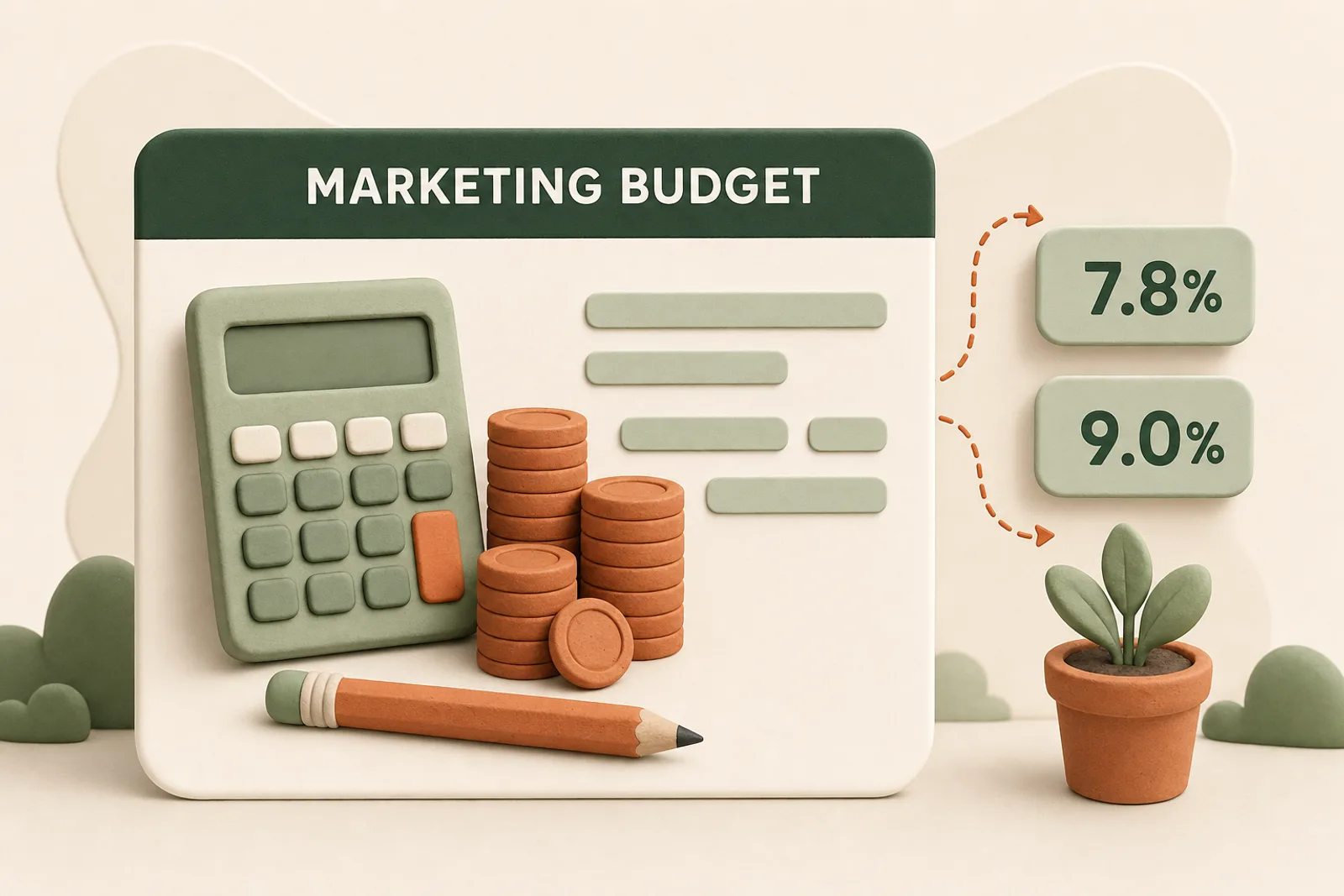
Gartner’s 2026 CMO Spend Survey, fielded January through March 2026 with 401 marketing leaders, puts average marketing budgets at 7.8% of company revenue, barely up from 7.7% the two years prior.
The CMO Survey, run out of Duke with Deloitte and the AMA, surveyed 308 US marketing leaders in January 2026 and found budgets at 9.0% of revenue, which it notes is the lowest reading in several years.
So the honest headline: big-company averages run 8 to 9% of revenue. But averages hide the number that matters for you.
Small companies spend a bigger share, not a smaller one
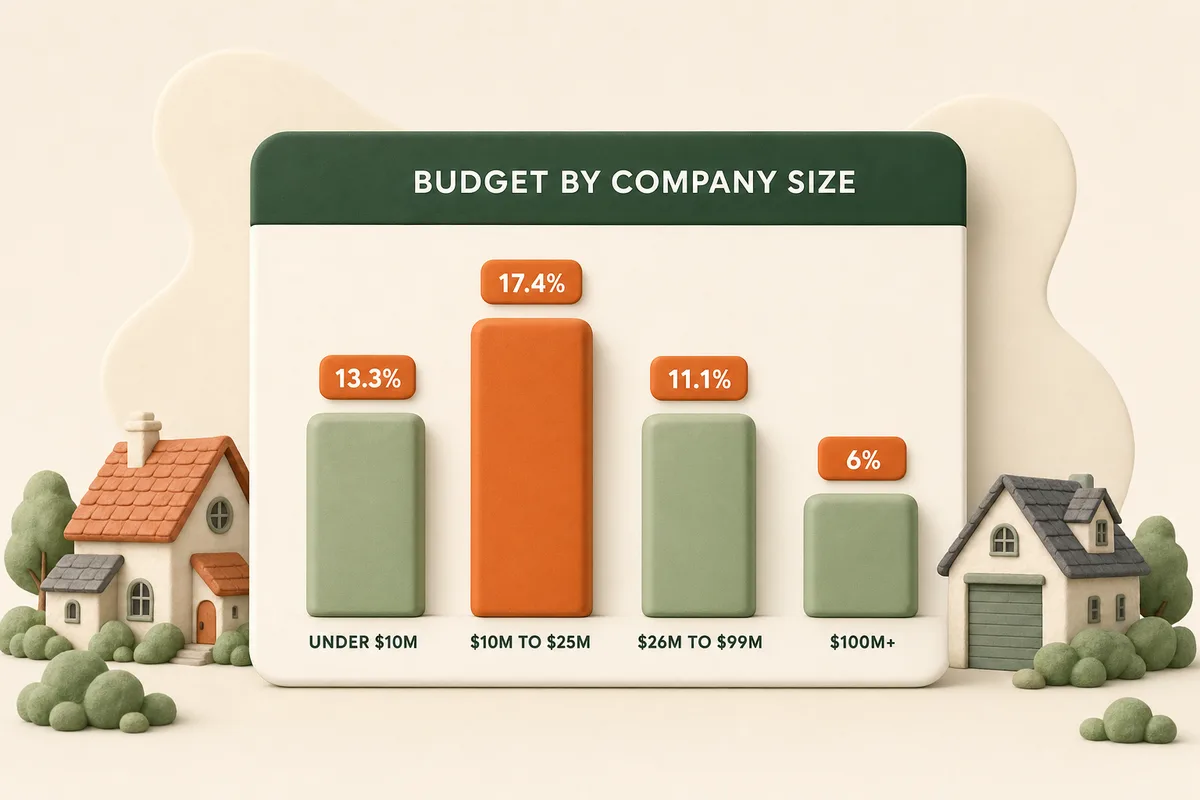
Buried in The CMO Survey’s firm-size breakouts is the finding that should reset how roofers think about this:
- Companies under $10M in revenue: 13.3% of revenue on marketing
- Companies at $10M to $25M: 17.4%
- Companies at $26M to $99M: 11.1%
- Companies over $100M: roughly 6%
Read that again. The businesses closest to your size report spending double the famous rule. That is not because small business owners love marketing. It is because a company without a decades-old reputation, a repeat-customer base, and a fleet of rolling billboards has to buy the attention that big companies get free.
One caveat, in the spirit of honest sourcing: the consumer-services slice of that survey is a small sample (18 companies, averaging 7.2%). Treat the size breakouts as directional, not gospel. Directionally, they all point the same way.
Why roofing specifically is expensive
Roofing is not an average industry, and the ad market proves it. LocaliQ analyzed 3,200+ home services search ad campaigns running from April 2024 to March 2025 and found roofing has the highest cost per lead in all of home services: $228.15 per lead, on a $10.70 average cost per click and a 3.7% conversion rate.
The reason is simple. When one closed job is worth $10,000 or more, every roofer in the metro bids on the same clicks, and the auction price climbs until the math barely works. That is what you are up against when your whole budget rents attention.
It is also the strongest argument for spending a real share of your budget on channels you own. Rankings, reviews, and a website that converts do not get more expensive every time a competitor enters the auction. We laid out that owned-versus-rented logic in the roofing SEO guide.
A framework you can actually use
Skip the debate about the perfect percentage. Pick your mode, then dollarize it.
Maintenance mode: 4 to 5% of revenue. Your calendar fills from reputation and repeat work, and you want to stay visible. Below this, you are coasting on momentum, and momentum runs out.
Growth mode: 7 to 10%. The survey averages live here for a reason. This is the range where an established company gains ground in an existing market.
Aggressive mode: 10 to 15%. New market, new service line, or a push to take share. This is what the under-$10M companies in the data are actually doing, and it is the honest price of buying attention you do not yet have.
For a $2M roofing company in growth mode, 7 to 10% is $140,000 to $200,000 a year, roughly $12,000 to $17,000 a month. Before you flinch: that covers everything, not just digital. Truck wraps, yard signs, referral bonuses, the golf hole sponsorship, any lead platforms you still use, and your website and SEO.
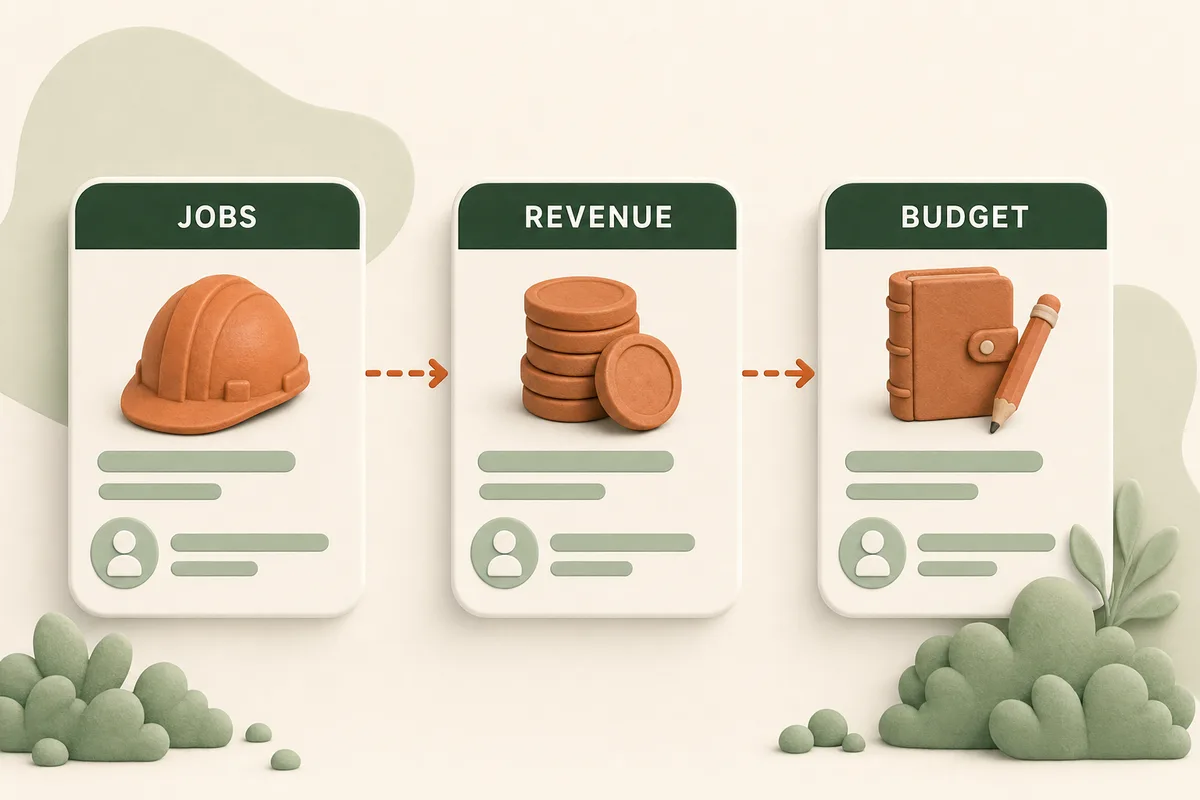
Then sanity-check the number backwards from jobs. If you want 20 extra replacement jobs next year at $10,000 average, that is $200,000 in new revenue. Spending $60,000 to get it means paying 30 cents per new-revenue dollar in year one, and less every year after if the spend built assets that keep producing. Spending $200,000 to get it means you bought a treadmill.
Where the money should go first
Order of operations, if you are allocating from zero:
- A website that converts and ranks. Every other dollar you spend eventually lands there. A weak site quietly taxes all of it. Here is what a roofing website should cost.
- Your Google Business Profile and reviews. The highest-return hours in roofing marketing, and mostly free. The SEO guide covers the specifics.
- SEO. The owned channel that compounds. Here is what it costs and why.
- Paid channels to fill gaps. Ads and lead platforms are speed, not strategy. Use them while owned channels ramp, with the LocaliQ numbers above open in front of you.
For what it is worth, our whole plan is $3,500 a month, everything included. For a $1M company that is 4.2% of revenue; for a $2M company, 2.1%. It fits inside any sane budget from the table above, which is intentional.
The bottom line
The real data says 8 to 9% of revenue is average, small companies report 13%+, and roofing’s ad economics punish anyone who rents all their attention. Pick maintenance, growth, or aggressive, dollarize it, sanity-check it against the jobs you want, and put owned channels first.
If you want a second opinion on where your current spend is leaking, get a free audit. I will look at your site, your rankings, and your top three competitors, and tell you straight where the next dollar should go.
Frequently asked questions
- What percentage of revenue should a roofing company spend on marketing?
- Current surveys put average marketing budgets at 7.8% of revenue (Gartner, 2026) to 9.0% (The CMO Survey, 2026), and companies under $10M in revenue report 13.3% on average. A practical range for an established roofer: 4 to 5% to hold steady, 7 to 10% to grow, and 10%+ to grow aggressively or break into a new market.
- How much is that in dollars for a typical roofing company?
- For a $2M roofing company, 7 to 10% is $140,000 to $200,000 a year, or roughly $12,000 to $17,000 a month across everything: digital, truck wraps, yard signs, referral programs, and any lead platforms. A $1M company at the same percentages budgets $6,000 to $8,000 a month.
- Why are roofing leads so expensive?
- Because one job is worth thousands of dollars, so every roofer bids for the same clicks. LocaliQ's 2025 analysis of 3,200+ home services ad campaigns found roofing has the highest cost per lead of any home services category at $228 per lead, with a 3.7% conversion rate. High job value attracts high competition, which is also the argument for channels you own.
- Should a new roofing company spend more or less than an established one?
- A bigger share, painful as that sounds. The CMO Survey's own breakouts show companies under $10M reporting 13.3% of revenue on marketing versus about 6% for companies over $100M. Established companies coast on reputation and repeat work. New companies are buying attention they do not have yet.
Read more
What roofing leads actually cost in 2026 (Angi, Google Ads, LSAs, SEO)
Verified 2026 numbers for every channel that sells roofing leads: marketplace per-lead prices, the FTC case, Google Ads benchmarks, LSA data, and the SEO cost curve.
How much does a roofing website cost in 2026?
Real 2026 pricing for roofing websites: DIY builders, freelancers, custom agency builds, and managed plans. What each costs upfront, monthly, and in lost leads.