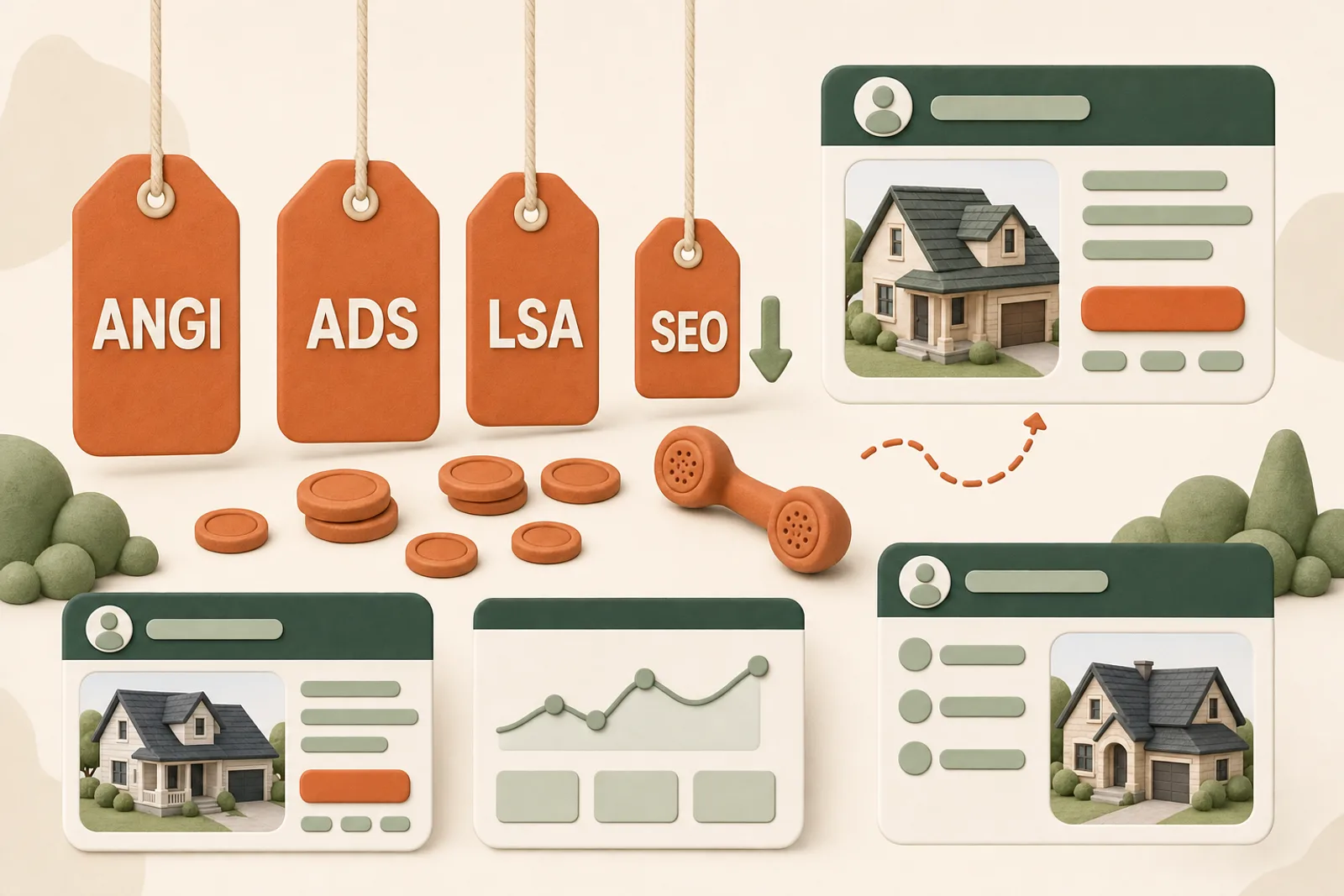

Every channel that sells roofing leads quotes its price in a different currency. Marketplaces quote per lead but share the lead. Google Ads quotes per click. LSAs quote per lead but set the price by auction. SEO quotes per month. None of the quotes compare to each other, which suits everyone selling them just fine.
This post converts them all into one currency: what a booked job actually costs you. Every number is sourced, the sourcing is dated, and where the only available figures are third-party estimates, I say so.
First, the only number that matters
The sticker price of a lead tells you almost nothing, because the channels differ wildly in what a “lead” is: an exclusive phone call from a homeowner watching your truck pull up is not the same product as a form submission sold to five contractors. So for every channel below, the question is the same: spend divided by jobs actually booked. Hold onto that; every seller’s marketing is designed to make you forget it.
Marketplace leads: Angi and HomeAdvisor
Start with what Angi’s own help center confirms, updated April 2026: “Each time a homeowner submits a project request, we will match them with no more than five pros,” and “you are charged for a lead as soon as both you and the homeowner show interest in connecting,” including “whether or not you open or respond to them.”
That is the product: a shared introduction, billed on contact. Angi publishes no per-lead prices, so the dollar figures come from third-party analyses: a February 2026 pricing breakdown puts roofing leads at $50 to $120+ each plus roughly $300 a year in membership, and a May 2026 contractor analysis reports the same lead ranges with real acquisition costs of $1,000 to $1,400+ per booked job once shared-lead close rates do their work. Treat those as estimates; treat the five-pros-per-lead mechanic as gospel, because Angi says it itself.
And one piece of public record worth knowing before anyone signs: in 2023 the FTC ordered HomeAdvisor, Angi’s sister brand, to pay up to $7.2 million for deceptively marketing its leads. The FTC found pros were told leads would match their services and area when “many of them did not,” and documented the $287.99 annual membership fee. That is not a blog’s opinion of marketplace lead quality. That is a federal enforcement action about it.
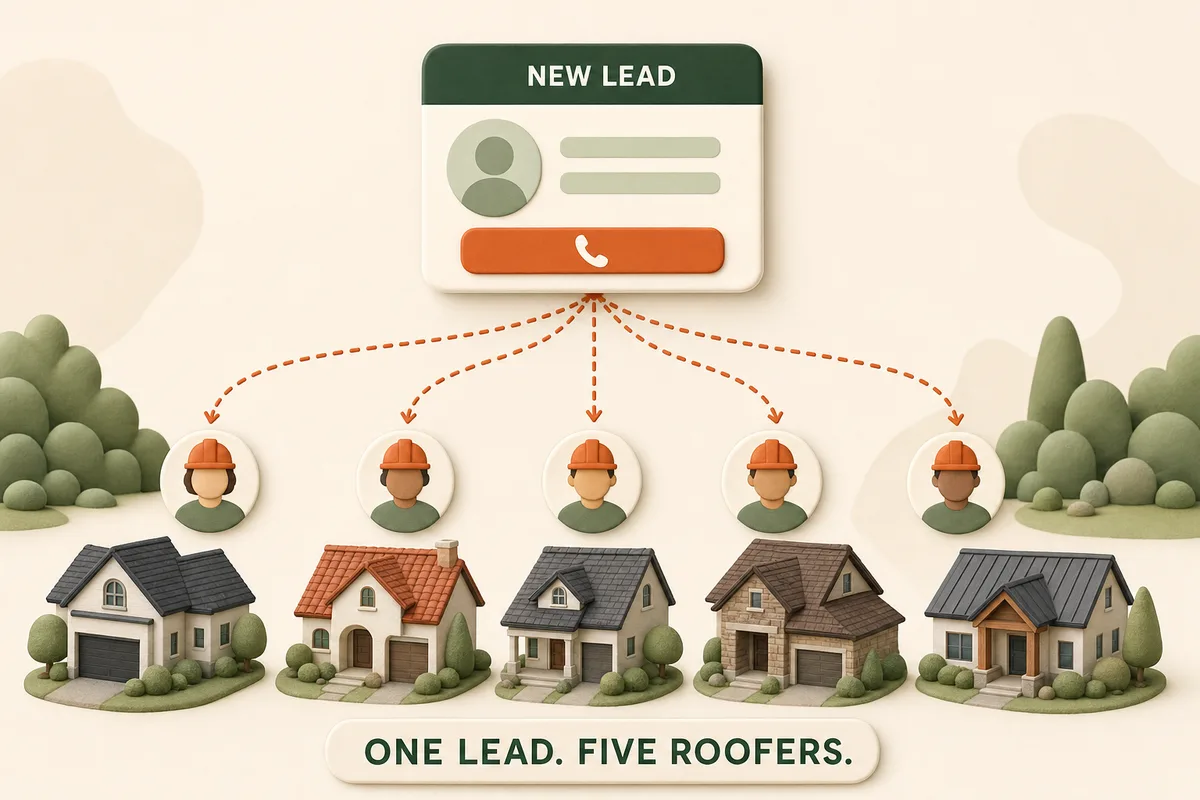
The cost-per-job math, using the middle of the estimated ranges: an $80 shared lead with four other pros calling the same homeowner converts in the low single digits to low teens for most contractors. Ten leads to win one job puts you at $800 in lead fees per booked job before your time; the published contractor analyses land even higher. Marketplaces sell speed, and speed is real. Just book it at its real price.
Google Ads: the most expensive clicks in home services
Here the data is excellent. LocaliQ’s benchmarks across 3,200+ home services campaigns (April 2024 to March 2025 data): roofing runs $10.70 per click and $228.15 per lead, the highest cost per lead of every home services category, with a 3.7% conversion rate near the bottom of the table. For scale, LocaliQ’s 2026 cross-industry average is $66.69 per lead: roofing pays 3.4 times the average business for a lead.
But these leads are exclusive and high-intent, which changes the back half of the math. At $228 per lead and a 30% close rate, typical for exclusive leads per the close-rate spreads we covered on the lead generation page, you are near $760 per booked job. Better than shared leads. Still a bill that resets to zero jobs every month you stop paying.
Local Services Ads: the pay-per-lead Google
LSAs are Google’s own per-lead product, the badged boxes above everything else. Google’s documentation confirms the model: you pay per lead, not per click, and “when similar local businesses bid on the same lead, those bids determine how much the lead is worth.” No public rate card exists.
The only published trade-level dataset we found, from an agency managing 100+ LSA accounts (August 2025), puts roofing at $162 average per lead, the highest of the home services trades measured, with two operationally useful details: businesses claw back 6 to 7% of spend as credits for unqualified leads, and over 90% of LSA leads arrive by phone. Phone leads from a Google-screened listing close well, which is why LSAs are usually the best of the paid channels for roofers, when your market’s auction is not overheated.
One large caveat with a date on it: Google is migrating US home-services LSA accounts into Performance Max campaigns with pay-per-lead goals starting August 2026. You will still pay only for valid leads, but manual bidding, including setting a maximum cost per lead, is being deprecated in favor of automated targets. If your LSA budget assumed a hard per-lead ceiling, that assumption has an expiration date.
SEO: the channel with a different shaped curve
Honesty first, since this is the channel we sell: SEO is not cheap and it is not fast. A real engagement runs $1,500 to $5,000 a month (sourced breakdown here), it costs that whether leads arrive or not, and the first months are investment, not harvest.
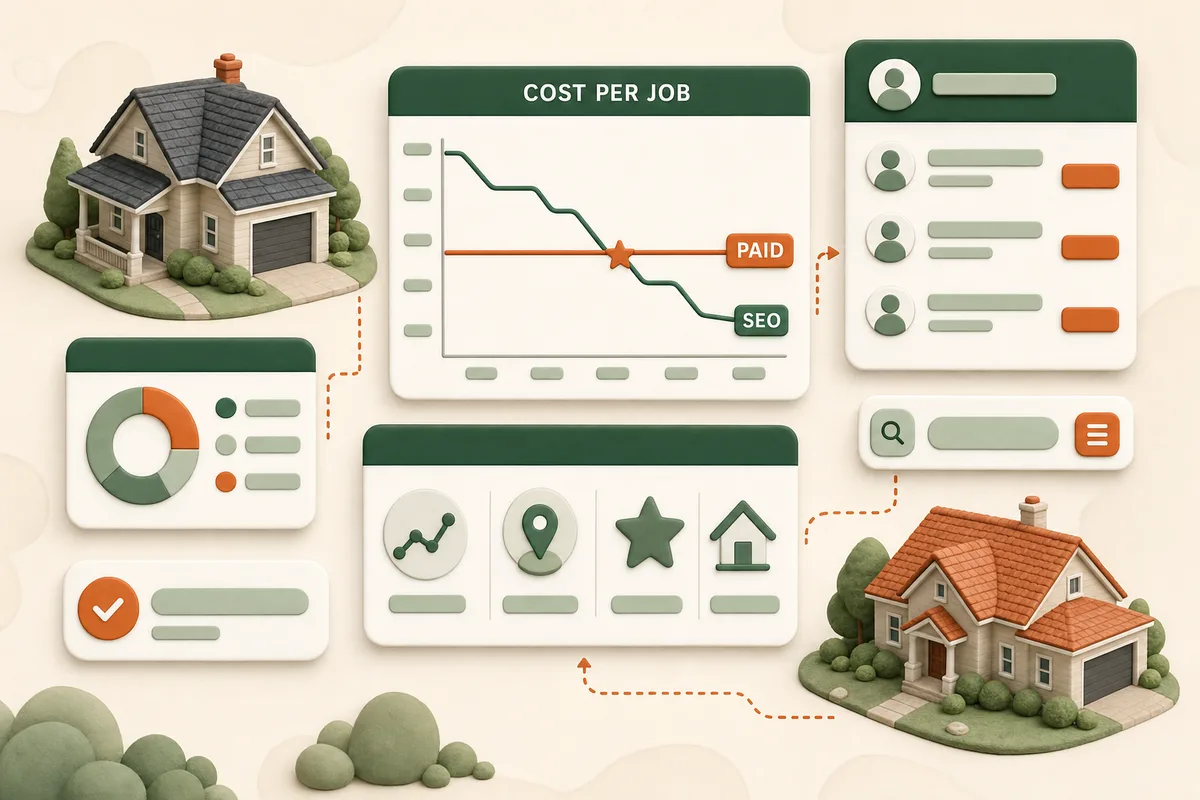
What SEO has that no channel above has is the direction of its curve. A purchased lead costs the same or more every month, forever, and stops the day you stop paying. A page that ranks keeps producing calls at zero marginal cost per additional lead, and rankings compound with work rather than resetting. The pillar guide covers the mechanics; the practical effect is that SEO’s cost per booked job starts high and falls every quarter, crossing below every paid channel for most established roofers somewhere in the first year.
The scorecard
Rough cost per booked job, from the verified figures above, with the estimate-based cells labeled:
- Shared marketplace leads: ~$800 to $1,400+ (third-party 2026 estimates; mechanics confirmed by Angi’s own docs)
- Google Ads: ~$760 at benchmark $228/lead and a 30% close (LocaliQ data)
- LSAs: ~$400 to $550 at $162/lead and a 30 to 40% phone-lead close (agency dataset)
- SEO: starts above all of them, falls below all of them; the crossover depends on your market and the plan you buy
The pattern is not that paid channels are evil. It is that every channel that sells leads one at a time has a floor price that never drops, and roofing’s floor prices are the highest in home services. The only channel whose price per job falls with time is the one where you own the asset.
What I would actually do
The portfolio that fits most established roofers: SEO as the core asset, LSAs as the paid layer while rankings build (eyes open on the August 2026 changes), Google Ads for surgical pushes in storm season, and marketplaces only when the calendar has holes that cost more than the leads do. And whatever mix you run, track spend per booked job monthly, per channel, because that one habit exposes every bad deal on this page within a quarter.
Want the math run on your actual numbers instead of benchmarks? Get a free audit. I will look at what you spend now, what it books, and what your market’s organic opportunity looks like, and show you the comparison in your dollars, not the industry’s.
Frequently asked questions
- How much do Angi roofing leads cost?
- Angi does not publish per-lead prices. Its own help center confirms each homeowner request goes to up to five pros and that you are charged as soon as mutual interest is shown, whether or not you respond. Third-party 2026 analyses put roofing leads at roughly $50 to $120+ each plus around $300 a year in membership, with real acquisition costs of $1,000 or more per booked job once shared-lead close rates are factored in.
- How much does a roofing lead from Google Ads cost?
- LocaliQ's benchmark data across 3,200+ home services campaigns puts roofing at $10.70 per click and $228.15 per lead, the highest cost per lead of any home services category and about 3.4 times the all-industry average of $66.69. At the category's 3.7% conversion rate, roofing clicks are expensive and most of them never become leads.
- What do Local Services Ads cost for roofers?
- Google confirms LSAs charge per lead with prices set by competitive bidding, not a published rate card. The only trade-level dataset we found, from an agency managing 100+ LSA accounts, puts roofing at $162 per average lead, the highest of the home services trades, with over 90% of leads arriving as phone calls. Note that Google is migrating US LSA accounts into Performance Max with pay-per-lead goals starting August 2026, and manual max-per-lead bidding is going away.
- Is SEO really cheaper than buying roofing leads?
- Not at first, which is the honest answer most comparisons skip. A real SEO engagement runs $1,500 to $5,000 a month whether leads arrive or not. The difference is the direction of the curve: purchased leads cost the same or more every month forever, while ranked pages keep producing at no marginal cost, so SEO's cost per lead falls as the channels that sell leads stay flat.
Read more
How much should a roofing company spend on marketing?
What real 2026 survey data says about marketing budgets, why small companies spend a bigger share than the 5-10% rule admits, and a working framework for roofers.
How much does a roofing website cost in 2026?
Real 2026 pricing for roofing websites: DIY builders, freelancers, custom agency builds, and managed plans. What each costs upfront, monthly, and in lost leads.