

You can buy roofing leads from four kinds of companies: home service marketplaces that sell shared leads, pay-per-call networks, exclusive lead vendors, and appointment setters. None of the big platforms publish a fixed roofing price list, the sharing rules differ, and the refund (“credit”) rules decide much of what you really pay.
So before you buy roofing leads, you need three answers in writing: how many other roofers get this lead, what exactly you pay for, and what you can get credited. This post covers how each type of roofing lead generation company works, what the platforms’ own documents say, the consent law that lands on you, the questions to ask, and the cost-per-job math that tells you whether a lead source is worth keeping.
I’ll be upfront about where I stand: we don’t sell leads. Our plan builds the website and Google Business Profile that bring you your own calls and quote requests, and we count the call-button taps and form requests. Bought leads still have a place for a lot of roofers, and when they do, you should buy them with your eyes open.
The four kinds of roofing lead generation companies
| Model | How you pay | Who else gets the lead | Published price list? |
|---|---|---|---|
| Home service marketplace | Per lead, often plus a membership | Usually shared (Angi: up to five pros) | No; prices vary by job, location, demand |
| Pay-per-call network | Per inbound call over a set length | Depends on the seller; ask | Rarely |
| Exclusive lead vendor | Per lead or a monthly retainer | Promised to you only | Rarely |
| Appointment setting | Per booked inspection or a retainer | Usually you only | Rarely |
The marketplace row is the only one with public documentation, so it is where the facts below come from. For the others, the questions in the checklist further down do the work.
Shared vs exclusive roofing leads
Angi’s help center is clear about its model: “We will match a homeowner with up to five pros,” and “you are charged for a lead as soon as both you and the homeowner show interest in connecting with each other.” For its standard leads, “you are charged for leads whether or not you open or respond to them.” Its separate “Opportunities” product works differently: if you don’t respond, “you will not be charged.”
On price, Angi says “lead fees change based on task, homeowner location, and demand for the work.” There is no public rate card. The dollar figures you will find are third-party estimates: a February 2026 analysis puts roofing leads at $50 to $120+ each, with metro areas often 20% to 25% higher, plus about $300 a year for access. Treat those as estimates. Treat the five-pros mechanic as fact, because Angi says it.
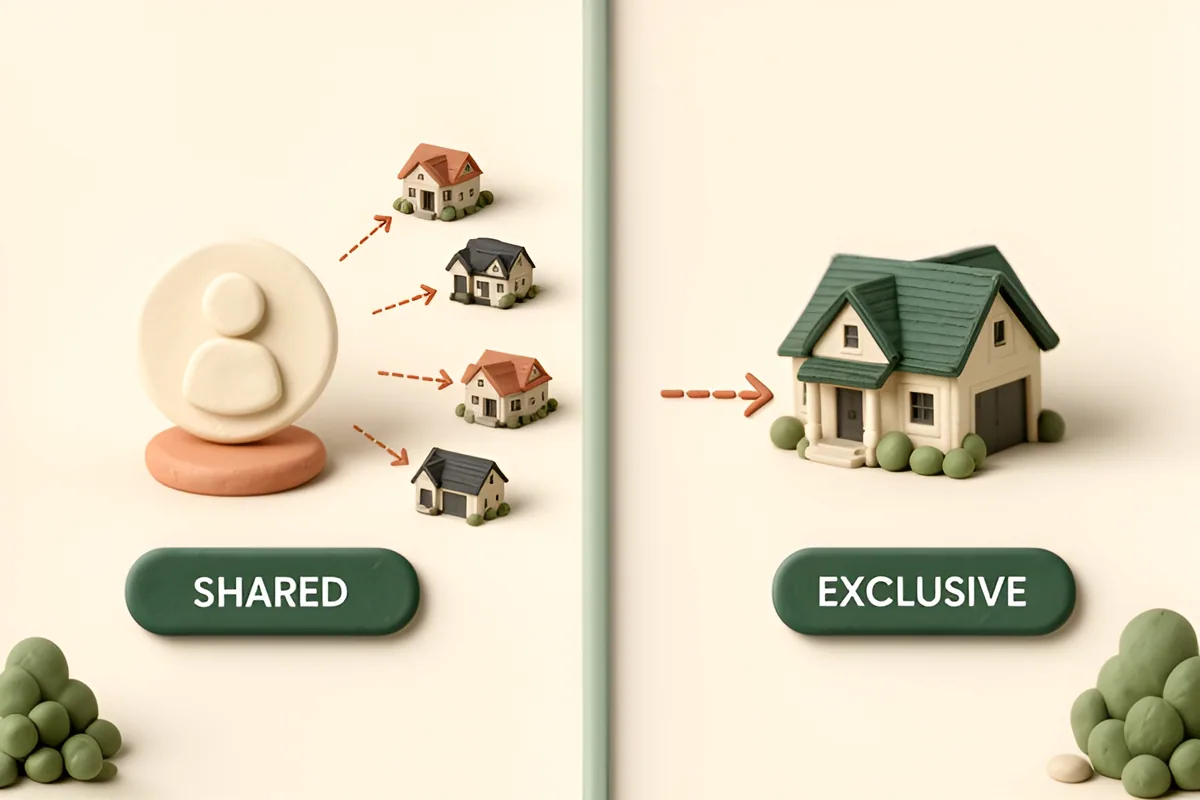
Shared leads aren’t a scam. They are a different product from an exclusive lead: a homeowner who will hear from several roofers within the hour. The roofer who calls first, shows up first, and has the most reviews usually wins. If your team can’t call back within minutes during business hours, shared leads will cost you more per job than the sticker price suggests.
Exclusive roofing leads are sold to one roofer. That is worth more, and costs more. The catch is that “exclusive” is a promise, not something you can see. Ask how the lead was generated (search ads, social ads, a comparison site, a call center) and whether the same homeowner’s details go anywhere else. Then check: if two leads in a row tell you they already heard from another roofer, you have your answer.
What it costs to buy roofing leads
Because sellers don’t publish prices, the useful question is not “what does a lead cost?” but “what does a lead cost to produce?” A seller’s price has to cover that plus a profit.
The best public number for producing a high-intent roofing lead is search advertising. LocaliQ’s home services benchmarks (3,211 US search campaigns, April 2024 to March 2025) put roofing and gutters at $228.15 per lead, the highest of any home services category, with clicks at $10.70. A seller offering “exclusive, high-intent roofing leads” far below that price is either very good at advertising, or the leads came from somewhere with weaker intent (social ads, sweepstakes forms, old lists), or they are not as exclusive as described. Ask which.
Cost per booked job is the only number that matters
A cheap lead that never closes is the most expensive lead you can buy. Here is the math in one table. The lead prices and close rates are illustrative inputs, not benchmarks; plug in your own.
| Lead price | Your close rate | Leads per job | Lead cost per booked job |
|---|---|---|---|
| $80 | 5% | 20 | $1,600 |
| $80 | 10% | 10 | $800 |
| $150 | 20% | 5 | $750 |
| $228 | 30% | about 3.3 | about $760 |
| $300 | 40% | 2.5 | $750 |
Look at how close the bottom four rows are. Price per lead and quality of lead tend to cancel out. That is why you must track close rate by source: the only way to know which row you are in is your own data. What roofing leads actually cost runs this comparison across Angi, Google Ads, Local Services Ads, and SEO.
What “guaranteed roofing leads” really guarantee
“Guaranteed roofing leads” is a common search, and a common sales line. In practice a guarantee covers invalid leads, not jobs. Angi’s lead credit article is a good example of what a credit policy looks like in writing. You can request a credit when:
- “The phone number is disconnected, not in service, or does not belong to the homeowner listed.”
- “The project location is outside the ZIP codes you have set in your profile.”
- “The project type does not match the specific services or tasks in your profile.”
- You were charged twice for the same homeowner within 45 days, or charged while your lead flow was paused.
The conditions: the lead “must be less than 45 days old,” you “should have attempted to call the homeowner within 24 hours,” and credits “will expire if not used within six months.” And here is what is not eligible: a homeowner who “does not answer your calls,” who “hired another pro before you reached them,” who “decided not to move forward,” who is “in the ‘shopping phase,’” or a quote where you “did not win the job.”
That list is the honest truth about every lead guarantee: the platform takes the risk that the lead is fake or misrouted, and you take the risk that it doesn’t buy. Any seller who claims to guarantee booked roofing jobs should be able to show you that promise in the contract.
Pay-per-call roofing leads
Pay-per-call sellers charge for inbound phone calls instead of form fills, usually once a call passes a set length. Calls are often better leads than forms, because the homeowner is on the line and you can book the inspection right then. Before you sign, get these in writing:
- The billable call length, and whether hold time and voicemail count.
- Whether every call is recorded and you can hear the recordings.
- Whether the caller was routed only to you or offered to other roofers first.
- How you dispute a wrong number, a robocall, a job seeker, or a sales call, and how fast credits post.
- The geography: which ZIP codes or radius your calls come from.
Appointment setting and “booked inspection” services
The newest pitch is to skip leads entirely and pay per booked inspection: a call center or outsourced team works a list or an ad campaign and puts appointments on your calendar. It sounds like the cleanest deal, because you only pay when a homeowner agrees to meet. Three things decide whether it is:
- What counts as booked. A confirmed time with the decision maker at home, or a name and a “maybe Thursday”? Get the definition in the contract, and what you pay when nobody answers the door.
- Where the homeowners came from. An inbound caller who asked for a roofer is a different person from someone a call center reached cold. The second needs the consent records covered in the next section.
- Who owns the data. If you stop paying, do you keep the homeowner list and the call recordings, or does the vendor?
Run it like any other source: a trial with a cap, then cost per signed job after 60 to 90 days.
The consent law that lands on you
If a lead source gives you a phone number, you will call and text it. Federal law cares how that number was collected. Under the FCC’s rules at 47 CFR 64.1200, telemarketing calls to cell phones using an autodialer or a prerecorded voice need “prior express written consent,” which means “an agreement, in writing, bearing the signature of the person called that clearly authorizes the seller” to make those calls. Electronic signatures count where the law recognizes them.
You may have read about the FCC’s “one-to-one consent” rule for lead generators. It was set to take effect on January 27, 2025, and the Eleventh Circuit vacated it days before, in Insurance Marketing Coalition v. FCC. The underlying consent requirements did not go away. I’m not a lawyer and this isn’t legal advice, but the practical habit is simple: ask every lead seller how consent is collected, ask to see the form the homeowner filled out, and keep the consent record with each lead.
Red flags, with a federal case attached
Lead quality claims are not just marketing talk. In 2023 the FTC ordered HomeAdvisor to pay up to $7.2 million. The FTC alleged that HomeAdvisor told service providers their leads would match their services and preferred area when many did not, and that it overstated how often leads turned into paying jobs. Providers paid an “annual membership fee of $287.99” plus a fee per lead.
The red flags that case points to, and that apply to any roofing lead generation company:
- Close-rate promises. “Our roofers close 40% of our leads” with no data behind it.
- Vague sourcing. If they can’t tell you where the leads come from, the answer is usually not good.
- Fuzzy exclusivity. “Limited sharing” or “premium” instead of a number.
- Long contracts for an untested source. A new lead source should earn a second month.
- A membership fee on top of per-lead fees, with no clear explanation of what it pays for.
The checklist before you buy roofing leads

Get every answer in writing:
- How many other contractors receive each lead? (A number, not an adjective.)
- How are leads generated, and what did the homeowner actually fill out or say?
- What is the exact price per lead or call, and what changes it?
- What qualifies for a credit, how long do I have, and when do credits expire?
- Is there a membership, setup fee, or minimum spend?
- How is TCPA consent collected, and can I see the record for each lead?
- Can I set my ZIP codes, job types (repair, replacement, commercial), and a daily cap?
- Can I pause or cancel anytime, and what happens to unused credits?
How to work bought leads so they pay
Buying is half the job. The other half is what your office does in the first hour:
- Call fast. On shared leads, the first roofer to reach the homeowner has a real edge. Angi’s own credit rules expect a call attempt within 24 hours; your target should be minutes.
- Use a script for the first call that books an inspection, not a price over the phone.
- Follow up. Many homeowners don’t answer the first call from an unknown number. Call, text, and call again over several days.
- Log every lead with its source and outcome, so you can fill in the cost-per-job table above with real numbers after 60 to 90 days.
- Cut what doesn’t pay. A source that can’t hit your target cost per job after a fair trial gets paused, no matter how good the sales rep is.
When to stop buying and start owning
Bought leads are a rental. The day you stop paying, they stop, and the homeowner’s relationship stays with the platform. That is fine as a supplement while you build the channels you own: referrals, reviews, a website that ranks, and a Google Business Profile that wins the map pack. How to get roofing leads without buying them covers that path, Angi alternatives for roofers covers the exit plan, and if you run commercial work, commercial roofing leads has its own playbook. If you want paid speed without the sharing, Google Local Services Ads and roofing PPC put exclusive calls under your own name. And the local SEO checklist for roofing companies is where owned leads start.
That owned side is what our roofing lead generation service builds: leads from your own site and profile that go to you and nobody else, tracked to the job. It runs on one flat monthly plan with no per-lead fees and no contract; the number is on our pricing page. If you are buying leads now and want to know what they really cost you per job, ask for a free audit and bring last quarter’s numbers.
Frequently asked questions
- Where can roofers buy leads?
- There are four main sources: home service marketplaces (Angi, Thumbtack, and similar) that sell shared leads per lead; pay-per-call networks that charge for phone calls over a set length; exclusive lead vendors that sell each lead to one roofer; and appointment-setting services that book inspections for you. None of the large platforms publish a fixed roofing price list, so get the price, the sharing rules, and the credit policy in writing before you buy.
- How much do exclusive roofing leads cost?
- There is no published market rate, because exclusive lead sellers set their own prices and rarely post them. A useful reference point: roofing Google Ads average $228.15 per lead in LocaliQ's benchmarks, so a seller producing leads from search ads has to charge enough to cover a similar cost. A much lower price usually means the lead came from somewhere with weaker intent, or is not as exclusive as promised. Ask how each lead is generated.
- Are guaranteed roofing leads real?
- A guarantee on leads usually means you can get a credit for a lead that is invalid: a wrong phone number, a project outside your area, or a service you don't offer. It almost never means a guarantee of booked jobs. Angi's credit policy, for example, excludes homeowners who stop responding, hire another pro, or are only gathering quotes. Read what the guarantee actually covers.
- What are the best roofing leads?
- The best roofing leads are exclusive, recent, from a homeowner in your service area who asked for the work you do, and delivered by phone in real time. Referrals and leads from your own website and Google Business Profile beat bought leads on all of those counts, which is why bought leads work best as a supplement.
- What are pay-per-call roofing leads?
- Pay-per-call means you pay for an inbound phone call rather than a form, usually only when the call lasts longer than a set number of seconds. Ask the seller for the billable call length, whether you get recordings, whether the call is exclusive to you, and how you dispute a call that was a wrong number or a sales pitch.
Read more
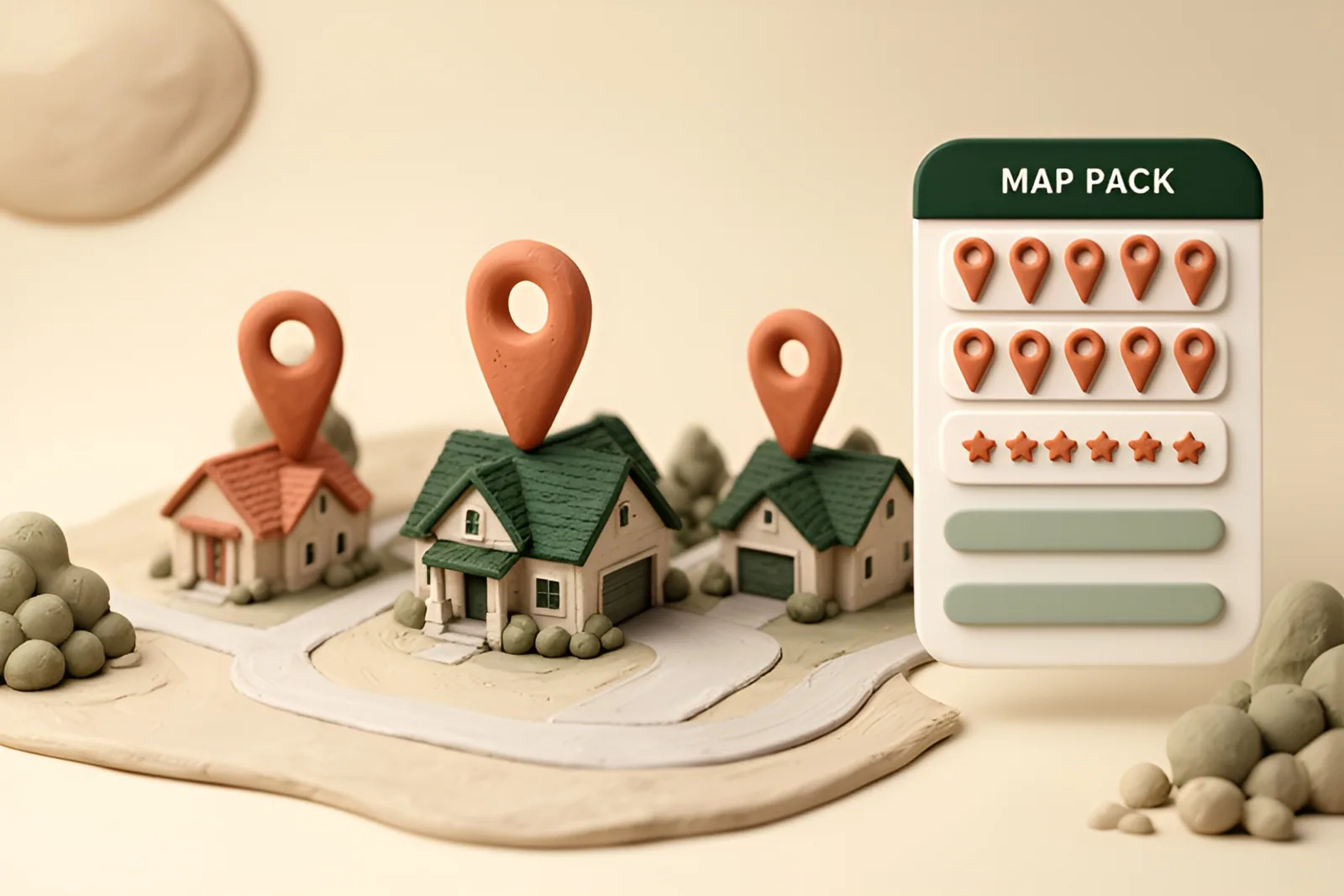
Local SEO for roofing companies: the map pack checklist
Local SEO for roofing companies, step by step: how Google picks the three map pack roofers, what you can control, and a checklist with sources.
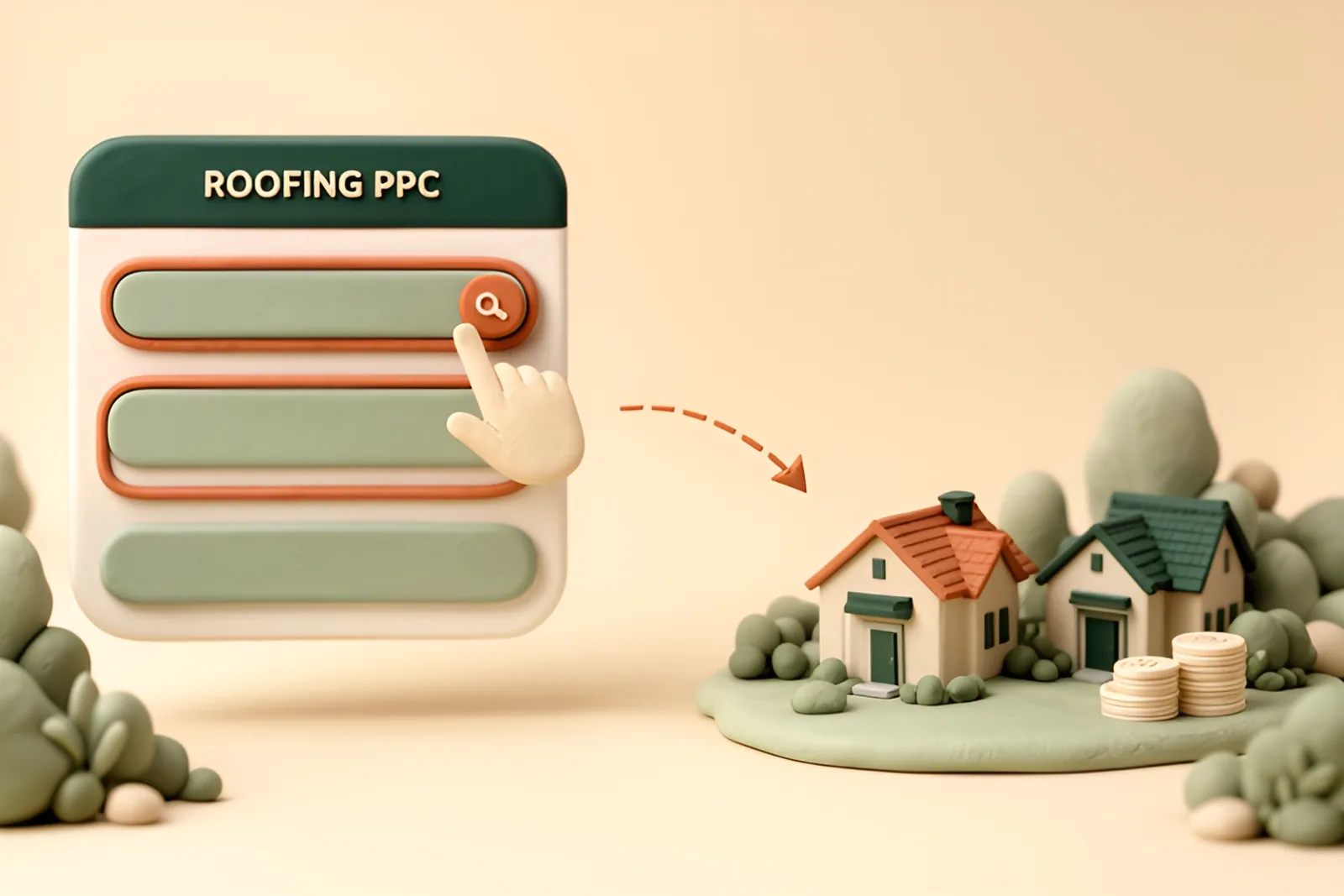
Roofing PPC: what Google Ads really cost roofers, and how to run them
Roofing PPC with real numbers: $10.70 per click and $228 per lead on Google Ads, the budget math, the campaign setup, and when to stop paying for clicks.