

Somewhere in your service area this week, a homeowner typed “who should I call about a leaking roof near me” into ChatGPT instead of Google. The question for your business is simple: when the answer comes back, are you in it?
This post covers what is verifiably true about AI search adoption, how assistants pick the businesses they recommend, and the practical checklist for a roofing company, with the usual rule on this blog: every number links to its source.
The adoption data, without the hype
Three verified datasets triangulate the shift:
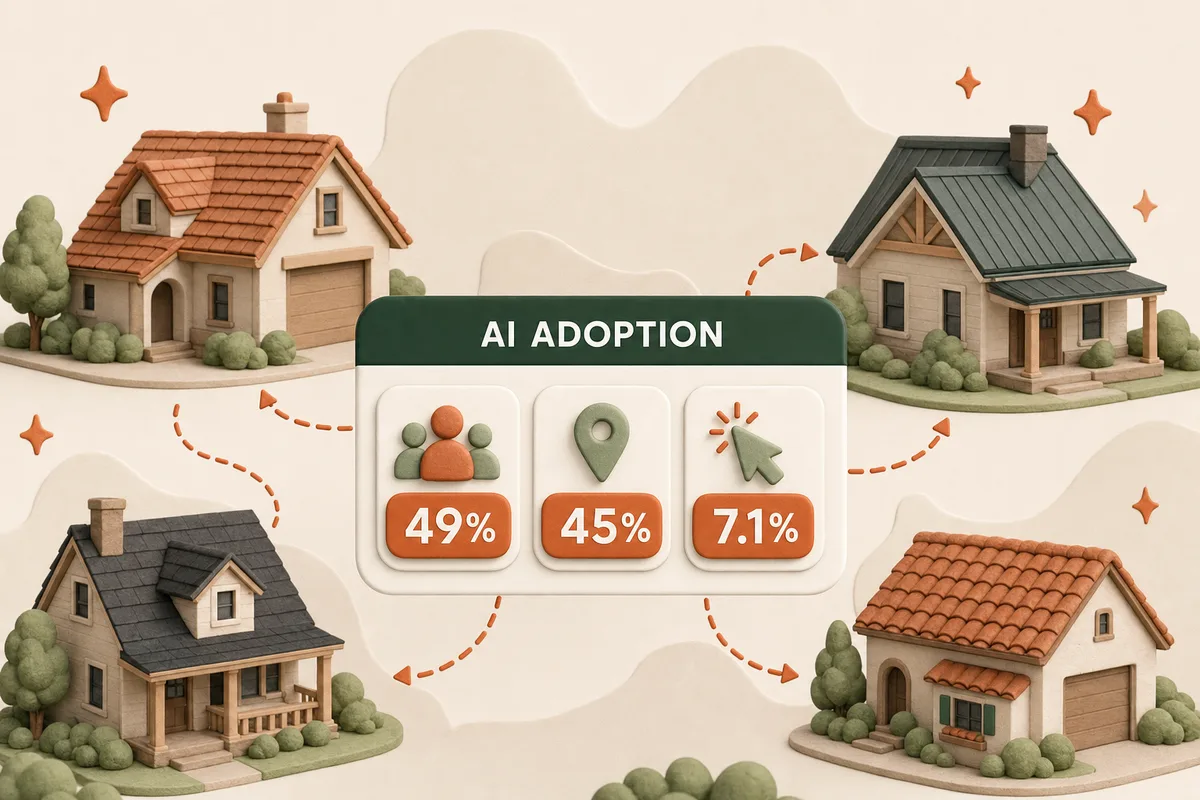
- Pew Research’s 2026 survey (5,119 US adults, February 2026): 49% of US adults now use AI chatbots, up from 33% in 2024, and about four in ten use chatbots for information searching. A quarter use them daily.
- BrightLocal’s 2026 consumer survey: consumers using ChatGPT and similar tools for local business recommendations jumped from 6% to 45% in one year, making AI the third most popular source for local recommendations.
- Similarweb’s AI traffic data: AI referral visits to websites more than tripled between September 2024 and September 2025, and ChatGPT referral traffic converts at 7.1%, second only to paid search at 7.8%. When ChatGPT made brand links clickable in May 2026, referrals jumped 157.7% in a week.
The picture: still a minority channel, growing at triple-digit rates, sending visitors who convert nearly as well as paid clicks. That is precisely the moment to be early, because the roofers cited today are training the recommendations of next year.
How assistants actually pick a roofer
There is no AI-search secret sauce to buy, and anyone selling “AI SEO packages” with proprietary tricks should meet the questions in our agency-hiring guide. Assistants recommending local businesses lean on the public evidence layer:
- Your Google Business Profile, because it is the structured record of what you do, where, and how customers rate you. Complete it properly.
- Reviews, in volume, sentiment, and recency, across platforms. The review thresholds homeowners apply are the same signals a model summarizes when asked “is this company good.”
- A website that says plainly who you are, what you do, where you work, and what it costs. Assistants quote clear pages and skip vague ones; schema markup and FAQ content make the extraction easier.
- Consistent information everywhere. Conflicting hours, dead numbers, and mismatched names read as risk to a model the same way they read to the 63% of consumers who hit inaccurate listings.
- Third-party mentions: local press, association directories, supplier listings. The honest link profile doubles as citation evidence.
Notice the pattern: this is the local SEO fundamentals list wearing a new hat. The work transfers completely. What changes is the packaging of your information, and one new audience to admit at the door.
Let the right robots in
OpenAI and Anthropic both document their crawlers, and the distinction matters:
- OpenAI runs three: GPTBot (model training), OAI-SearchBot (powers ChatGPT’s search results), and ChatGPT-User (fetches pages when a user asks about you live).
- Anthropic likewise: ClaudeBot (training), Claude-SearchBot (search quality), and Claude-User (live user requests).
All honor robots.txt. Publishers with content businesses argue about the training bots; for a roofing company whose entire website exists to be found, blocking the search and user bots is self-sabotage. Being uncitable in the tools 45% of consumers now consult for local recommendations is the new unlisted phone number. Our stance on our own site: all of them are explicitly welcome.
llms.txt: cheap hedge, honest expectations
llms.txt is a proposal from September 2024 (Jeremy Howard of Answer.AI): a markdown file at your site root summarizing your business and key pages for AI systems, like robots.txt’s helpful cousin. Honest status: adoption grew through documentation platforms, but no major AI company has officially committed to reading it.
So why bother? Because it costs an hour, it cannot hurt, and the exercise forces you to write the one-page plain-language summary of your business (what you do, where, for whom, at what price) that your website should contain anyway. We run one at therooferseocompany.com/llms.txt describing exactly who we serve and what we charge. If assistants standardize on the file, early sites win; if not, you spent an hour writing your elevator pitch.
The roofing AI-readiness checklist
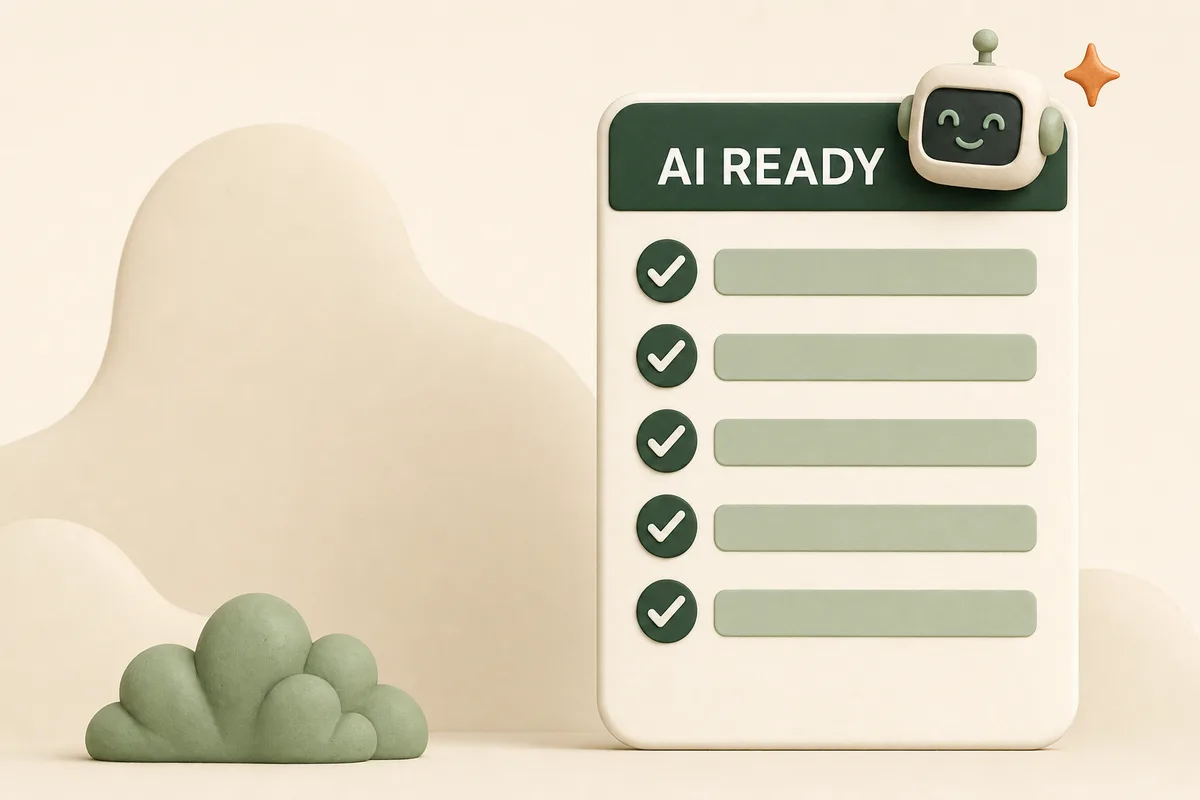
- Business Profile complete, categories true, photos current
- Review velocity live: recent, responded, plural platforms
- One clear page per service and city, with FAQ blocks answering real questions in plain sentences
- Schema markup: Organization, Service, FAQ, and prices where you publish them
- Consistent name, address, phone, and hours everywhere your business appears
- robots.txt welcoming search/user bots from OpenAI, Anthropic, Perplexity, and Google
- llms.txt summarizing the business, an hour well spent
- Transparent pricing on the site, which 65% of homeowners already prefer and which gives assistants a concrete fact to cite about you
Every item doubles as classic local SEO, which is the point: the AI channel rewards the same honesty and completeness the rest of your marketing should already have.
Want to know what ChatGPT says about roofers in your market today, and whether your company is findable, verifiable, and citable when it answers? Get a free audit and I will include exactly that check.
Frequently asked questions
- Do homeowners really use ChatGPT to find roofers?
- Increasingly, yes. Pew Research's 2026 survey found 49% of US adults use AI chatbots and about four in ten use them for information searching, while BrightLocal's 2026 consumer survey found the share using generative AI for local business recommendations jumped from 6% to 45% in a single year. The behavior is early but growing at a rate no roofer should ignore.
- How do AI assistants decide which roofing companies to recommend?
- From the same public evidence that drives local SEO: your Google Business Profile completeness, review volume and sentiment, a website that states plainly what you do and where, consistent business information across the web, and third-party mentions. There is no separate trick. Companies with strong local SEO fundamentals are the ones AI tools can find, verify, and confidently cite.
- Should I block AI crawlers like GPTBot from my roofing website?
- For a lead-generation business, no. OpenAI and Anthropic document their crawlers and honor robots.txt, but blocking their search-focused bots (OAI-SearchBot, Claude-SearchBot) removes you from the answers your future customers are reading. Being uncitable is the modern equivalent of being unlisted.
- What is llms.txt and does my roofing site need one?
- A proposed standard from September 2024: a markdown file at yoursite.com/llms.txt that gives AI systems a curated summary of who you are, what you do, and where your key pages live. No major AI company has committed to reading it, so treat it as a low-cost hedge rather than a ranking lever: it takes an hour, and it is exactly the plain-language summary you should have anyway.
Read more

Why your roofing website isn't getting leads (a 15-minute diagnosis)
The seven failure points that silence a roofing website, in the order to check them, with the homeowner behavior data that explains each one.
What to expect from roofing SEO, month by month
The honest timeline nobody puts in the proposal: what actually happens in months 1 through 12 of a roofing SEO engagement, what to measure, and when to worry.