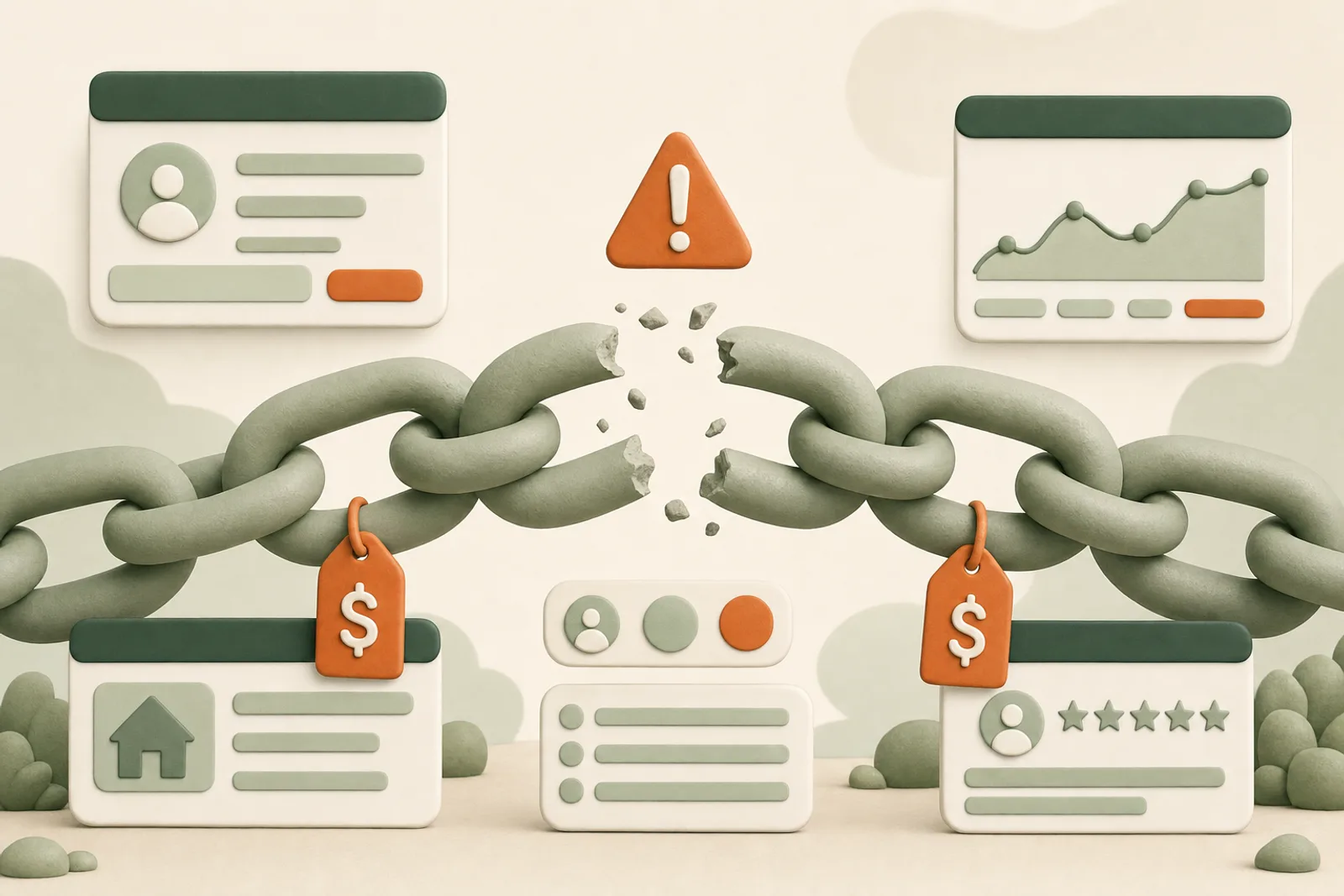

Somebody has probably already pitched you: 50 backlinks for $200, guaranteed rankings. Or the fancier version, $400 per link on “high authority” sites. So, should a roofing company buy backlinks?
Mostly no, and I will show you exactly why with Google’s own policy text and real market prices, because the usual answers are either “never, you will be banned” (overblown) or “everyone does it, go ahead” (reckless). The truth has more nuance, and the nuance is where local businesses win.
What Google’s policy actually says
Straight from Google’s spam policies, last updated May 2026:
“Link spam is the practice of creating links to or from a site primarily for the purpose of manipulating search rankings.”
The first example listed: “Exchanging money for links, or posts that contain links.” Also on the list: exchanging goods or services for links, and sending someone a product in exchange for a post with a link.
The consequences, in Google’s words: “Sites that violate our policies may rank lower in results or not appear in results at all.” Enforcement runs through automated systems and, when needed, human review that can end in a manual action.
And here is what a manual action means in practice, per Google’s own documentation: a human reviewer flags “a pattern of unnatural, artificial, deceptive, or manipulative links pointing to your site,” and some or all of your site stops showing in results until you clean it up and file a reconsideration request. For a roofer who gets most calls from search, that is the phone going quiet.

The exception that actually matters
Now the part most “never buy links” articles skip. The same policy says:
“It’s not a violation of our policies to have such links as long as they are qualified with a rel=“nofollow” or rel=“sponsored” attribute value to the <a> tag.”
Translation: paying for visibility is fine. Paying for ranking credit is not. Sponsoring the little league team, buying a banner on the local news site, paying for a directory listing: all completely fine when the link is tagged as sponsored. You still get seen by homeowners, you still build the brand, you just do not get (or need) the ranking juice from that specific link.
That distinction is the whole game, and it means most of the “link buying” a local roofer is tempted by has a legitimate twin that costs the same and carries no risk.
What paid links cost in the real market
If the policy risk does not move you, the prices might. Ahrefs ran an outreach study posing as a link buyer: of 450 sites contacted across nine niches, only 12.6% would sell a link at all, and the ones that would charged an average of $361.44 for a niche edit (a link inserted into an existing article). Paid guest post placements averaged $77.80, before anyone writes the content. A survey of 755 link builders cited in the same study put the average paid link at $83, and found 74.3% of link builders buy links.
So the real market looks like this: legitimate-looking links cost hundreds of dollars each, the $4-a-link bulk packages are exactly as fake as they sound, and the people selling “guaranteed DR90 links” to roofers are reselling spam at a markup. To move rankings with purchased links you would need dozens, at $80 to $400 each, carrying policy risk the entire time. There are better uses for that money.
The local reality: you need fewer links than you think
Here is the part that changes the calculus for roofers specifically. Google’s own explanation of local ranking says prominence is “based on info like how many websites link to your business and how many reviews you have,” and adds a sentence the link sellers never quote: “There’s no way to request or pay for a better local ranking on Google.”
You are not competing with the entire internet. You are competing with the ten roofers in your service area, most of whom have never earned a single intentional link. In that fight, a modest profile of genuinely local links plus a strong review profile is usually enough to cover prominence. We break down how the whole local ranking system fits together in the roofing SEO guide.
What to do instead of buying
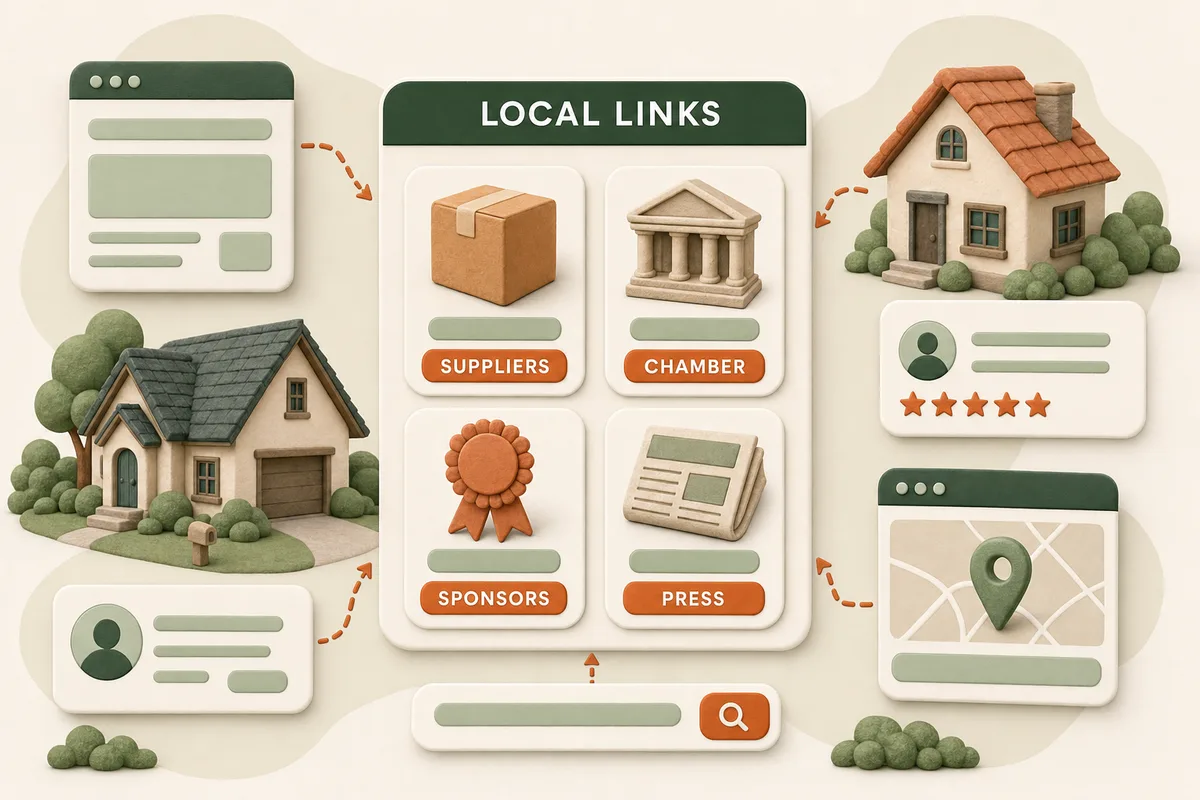
Every one of these is available to an established roofer, none requires a link broker:
- Your suppliers and manufacturers. Certified installer? GAF, Owens Corning, and the rest run contractor directories. Distributors often list their dealers. These are the easiest relevant links in the industry.
- Trade associations. State roofing associations, the NRCA, licensing bodies. Membership usually includes a profile page.
- Chamber of commerce and BNI-style groups. Local, legitimate, and linked.
- Sponsorships, done correctly. Teams, events, charity reroofs. Ask for the link to be tagged sponsored and enjoy the visibility with zero policy risk.
- Local press. After a major storm, reporters need a roofer who can explain what homeowners should check. Be reachable, be quotable, get linked from the local news site.
- Real relationships. The realtor who recommends you, the insurance adjuster you work well with, the home inspector’s resource page. Links follow relationships that already exist.
A dozen links like these beat a hundred purchased ones for a local service business, and nobody can take them away from you.
The verdict
Buying links that pass ranking credit is explicitly against Google’s spam policy, costs $80 to $400 per decent-looking link in the real market, and is mostly unnecessary for a business competing in one metro. Sponsorships and paid placements are fine when tagged properly, and the local link sources above cover what a roofer actually needs.
If someone is currently selling you “authority links” and you want to know what they actually bought, get a free audit. I will pull your link profile, show you what is helping, what is dead weight, and whether anything there could get you in trouble.
Frequently asked questions
- Is buying backlinks illegal or against Google's rules?
- Not illegal, but explicitly against Google's spam policies, which list exchanging money for links, or posts that contain links, as link spam. Sites that violate the policy can rank lower or be removed from results entirely, through automated systems or a manual action reviewed by a human.
- How much do paid backlinks cost?
- More than most roofers expect. Ahrefs contacted hundreds of sites and found niche edit links average $361.44, with paid guest post placements averaging $77.80 before content costs. A survey of 755 link builders cited in the same study put the overall average paid link at $83. Quality costs more, and cheap bulk links are the ones most likely to hurt you.
- Can sponsoring a local team or event help my roofing SEO?
- Yes, and it is fully within Google's rules when done right. Paid placements are fine when the link uses a rel="sponsored" or rel="nofollow" attribute. You still get the local visibility, brand searches, and referral traffic. What you cannot do is pay specifically for links that pass ranking credit.
- How many backlinks does a roofing website actually need?
- Far fewer than national sites. You are competing against the roofers in your service area, not the whole country. A profile of genuinely local, relevant links (suppliers, associations, chambers, local press) plus a strong review profile typically covers the prominence side of local ranking. Volume matters much less than local relevance.
Read more

Why your roofing website isn't getting leads (a 15-minute diagnosis)
The seven failure points that silence a roofing website, in the order to check them, with the homeowner behavior data that explains each one.
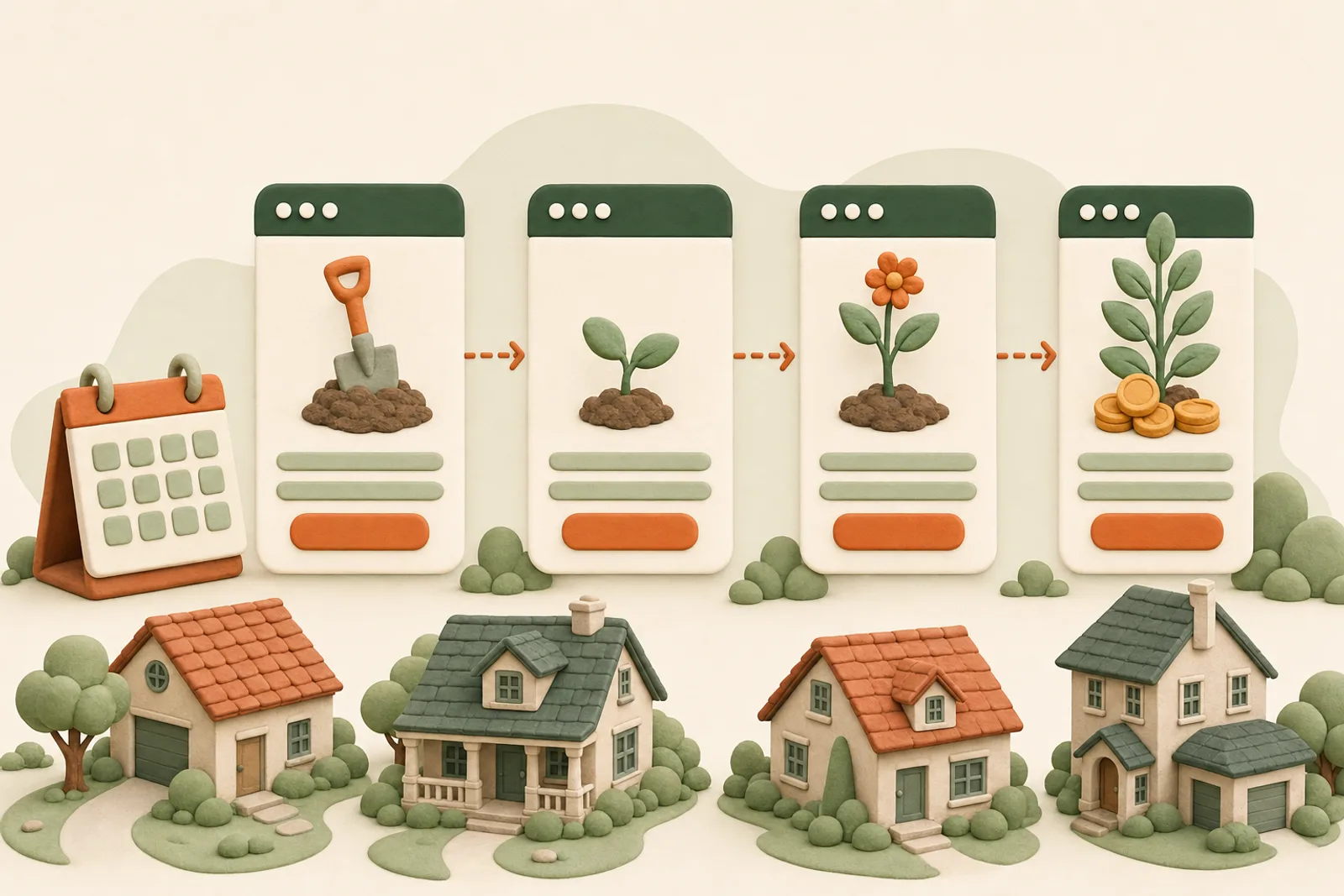
What to expect from roofing SEO, month by month
The honest timeline nobody puts in the proposal: what actually happens in months 1 through 12 of a roofing SEO engagement, what to measure, and when to worry.