

Every list of “ways to get more Google reviews” gives you the same tactics: send a link, print a QR code, put it in your email signature. Fine. What almost none of them tell you is that some of the most common review tactics roofing companies actually use are now federal violations with five-figure penalties, or that homeowners apply specific numeric cutoffs when they read your profile.
This is the complete picture: the thresholds, the system, and the law.
The thresholds homeowners actually apply
BrightLocal’s 2026 Local Consumer Review Survey (1,002 US consumers, February 2026) reads like a spec sheet for your review profile:
- 97% of consumers read reviews for local businesses.
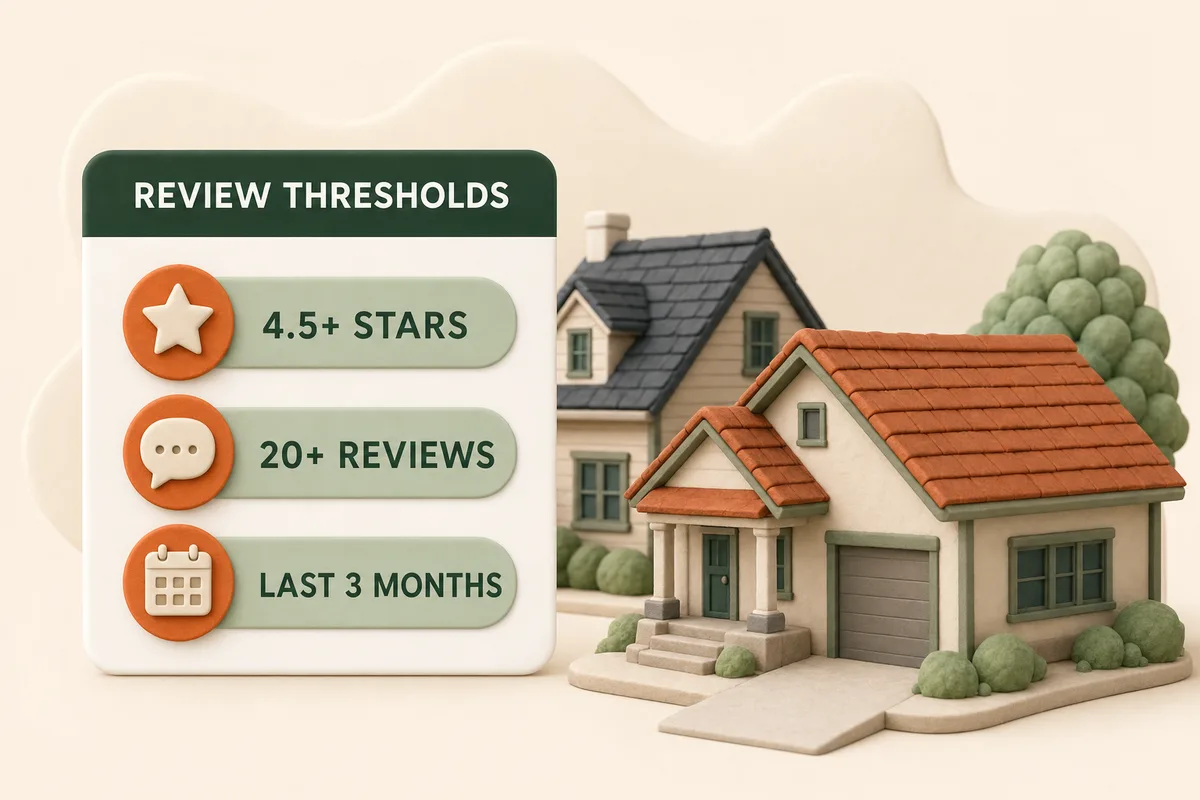
- 31% will only use a business rated 4.5 stars or higher.
- 47% will not use a business with fewer than 20 reviews.
- 74% only care about reviews written in the last three months.
- An owner response is a top-five trust factor, cited by 37%.
Under 20 reviews, under 4.5 stars, or nothing recent: each one silently filters you out of a slice of the market before you ever bid. And the recency stat is the one that should reorganize your habits, because it means reviews expire. A hundred reviews from 2024 are a museum. Google agrees on the stakes: its local ranking documentation names review count and positivity as prominence inputs directly.
The system: velocity beats volume
The math of roofing makes review velocity easy, because every completed job is a review opportunity with a delighted customer standing on their driveway. The system:
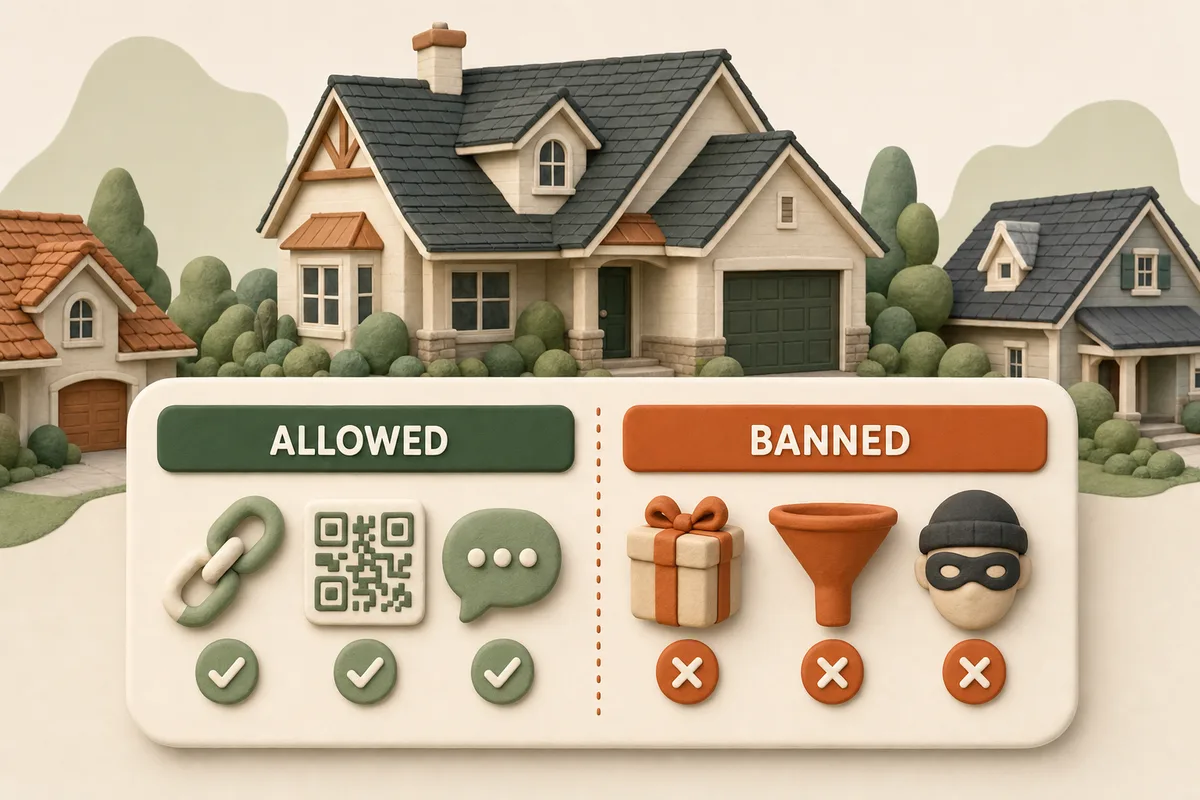
- The ask happens the day the job closes. Final walkthrough done, homeowner happy, crew lead or office sends the text within the hour: thanks, and the direct Google review link. Google’s own guidance endorses exactly this: share the review link or a QR code, make it effortless.
- It is a checklist item, not a vibe. Tie it to the same close-out process as the final invoice. Companies that “ask when we remember” get four reviews a year; companies that ask every time get four a month.
- Respond to every review. Google’s same page notes that replying builds trust and “may even encourage the customer to update their review.” The 37% trust stat above says homeowners are watching for it.
- Spread a little. Google first, always. But BrightLocal found consumers now check an average of six review platforms, and Google’s own share as a review destination fell from 83% to 71% in a year. A handful of reviews on Facebook and the BBB stops those pages from being empty rooms.
That is the whole system. It is boring, it is free, and done for a year it builds the kind of profile that wins map packs.
The law: what you cannot do, precisely
Here is the section every competing guide skips, with the actual wording.
No incentives, ever. Google’s review policy prohibits offering “payment, discounts, free goods and/or services, in exchange for posting any review or revision or removal of a negative review.” The $50-gift-card-for-a-review play violates policy on its face.
No review gating. The same policy prohibits practices that “discourage or prohibit negative reviews, or selectively solicit positive reviews from customers.” That “check your experience first” pre-survey your review software offers? That is gating. Turn it off.
No fake or purchased reviews. Google’s Maps content policy bans “reviews or ratings that have been paid for, directly or in kind” and content “posted from multiple accounts by or at the request of one person.” Your cousin’s five accounts count.
And now it is federal. In August 2024 the FTC finalized its Consumer Review Rule (16 CFR Part 465), banning fake reviews, bought reviews, and undisclosed insider reviews, with civil penalties for knowing violators. This is not theoretical: in December 2025 the FTC sent warning letters to businesses over fake and incentivized five-star reviews, and stated the current penalty: up to $53,088 per violation. Per review.
The practical summary: ask everyone, honestly, with nothing attached, and let the work earn the stars. Which, conveniently, is also the strategy that works.
Negative reviews: the response is the product
You will get a bad review eventually. Storm season stress, a scheduling misfire, a homeowner having a bad week. What matters is that the response is written for the audience, not the author: the hundred future homeowners who will read the exchange while choosing a roofer.
The formula: respond within a day or two, thank them for the feedback, state your side briefly and factually without arguing, and move resolution offline (“call me directly and I will make it right”). No lawyering, no sarcasm, no paragraphs. A 4.7-star profile with calm, professional responses to its three bad reviews reads as more trustworthy than a suspicious wall of perfect fives, and homeowners say exactly that in the survey data.
What you must not do: offer anything to remove it (prohibited, see above), or report it as fake just because it is negative. Report reviews only when they genuinely violate policy (wrong business, competitor spam, no actual customer relationship).
Make the reviews work twice
Reviews you have earned should not live only on Google. Pull the best ones onto your website’s service pages as social proof, reference them in estimates (“here is what the last ten homeowners said”), and let the themes tell you what to fix operationally. If every third review praises your cleanup, your marketing has found its differentiator; if two mention communication gaps, your process has found its bug.
This whole engine, profile plus reviews plus the website behind them, is the prominence half of local SEO. The complete machine is in the roofing SEO guide, and the profile setup half is in the Google Business Profile guide.
Want to know how your review profile stacks against the three roofers above you in the map pack, and whether anything in your current process would worry the FTC? Get a free audit. I will tell you straight.
Frequently asked questions
- How many Google reviews does a roofing company need?
- Treat 20 recent reviews at 4.5 stars or better as the floor, because that is where homeowner behavior puts it: BrightLocal's 2026 survey found 47% of consumers will not use a business with fewer than 20 reviews and 31% require a 4.5+ rating. Past the floor, recency and steady velocity matter more than the total, since 74% only care about reviews from the last three months.
- Is it legal to offer customers a discount for a Google review?
- No, on two levels. Google's review policy prohibits offering 'payment, discounts, free goods and/or services' for posting, editing, or removing any review. And since October 2024, the FTC's Consumer Review Rule makes buying reviews a federal violation with civil penalties the FTC currently states at up to $53,088 per violation. Ask for honest reviews, offer nothing in exchange.
- What is review gating and why does it matter?
- Review gating is filtering customers before asking, sending happy customers to Google and unhappy ones to a private form. Google's policy prohibits it in plain words: you may not 'discourage or prohibit negative reviews, or selectively solicit positive reviews from customers.' Review tools that offer a 'pre-survey' filter are selling a policy violation.
- Should a roofer respond to negative reviews?
- Always, fast, and like a professional, because the response is written for the hundred future homeowners reading it, not the one angry author. Acknowledge, give your side factually and briefly, and offer to make it right offline. An owner who responds well to a bad review often earns more trust than a wall of five-star ratings.
Read more

Why your roofing website isn't getting leads (a 15-minute diagnosis)
The seven failure points that silence a roofing website, in the order to check them, with the homeowner behavior data that explains each one.
What to expect from roofing SEO, month by month
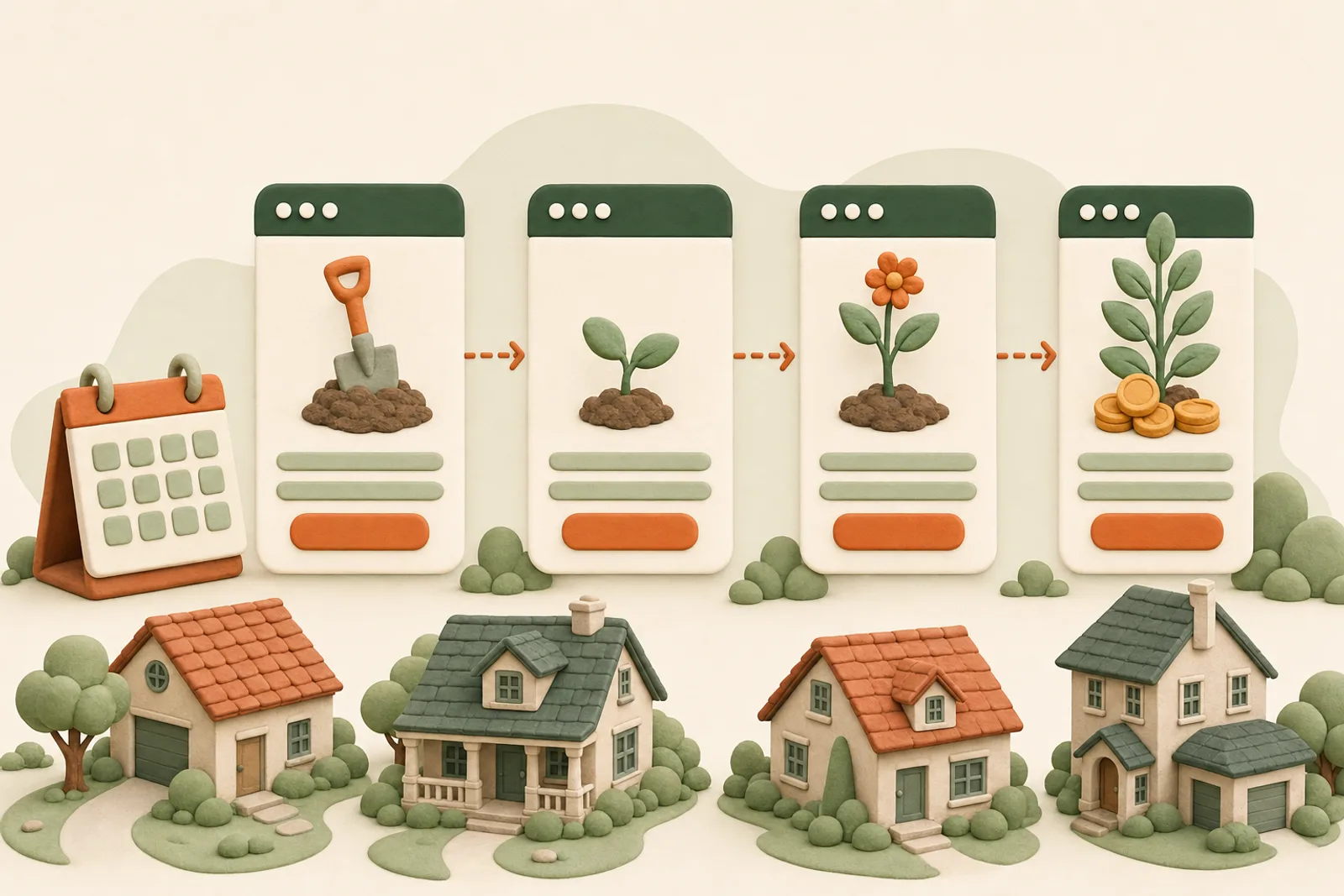
The honest timeline nobody puts in the proposal: what actually happens in months 1 through 12 of a roofing SEO engagement, what to measure, and when to worry.