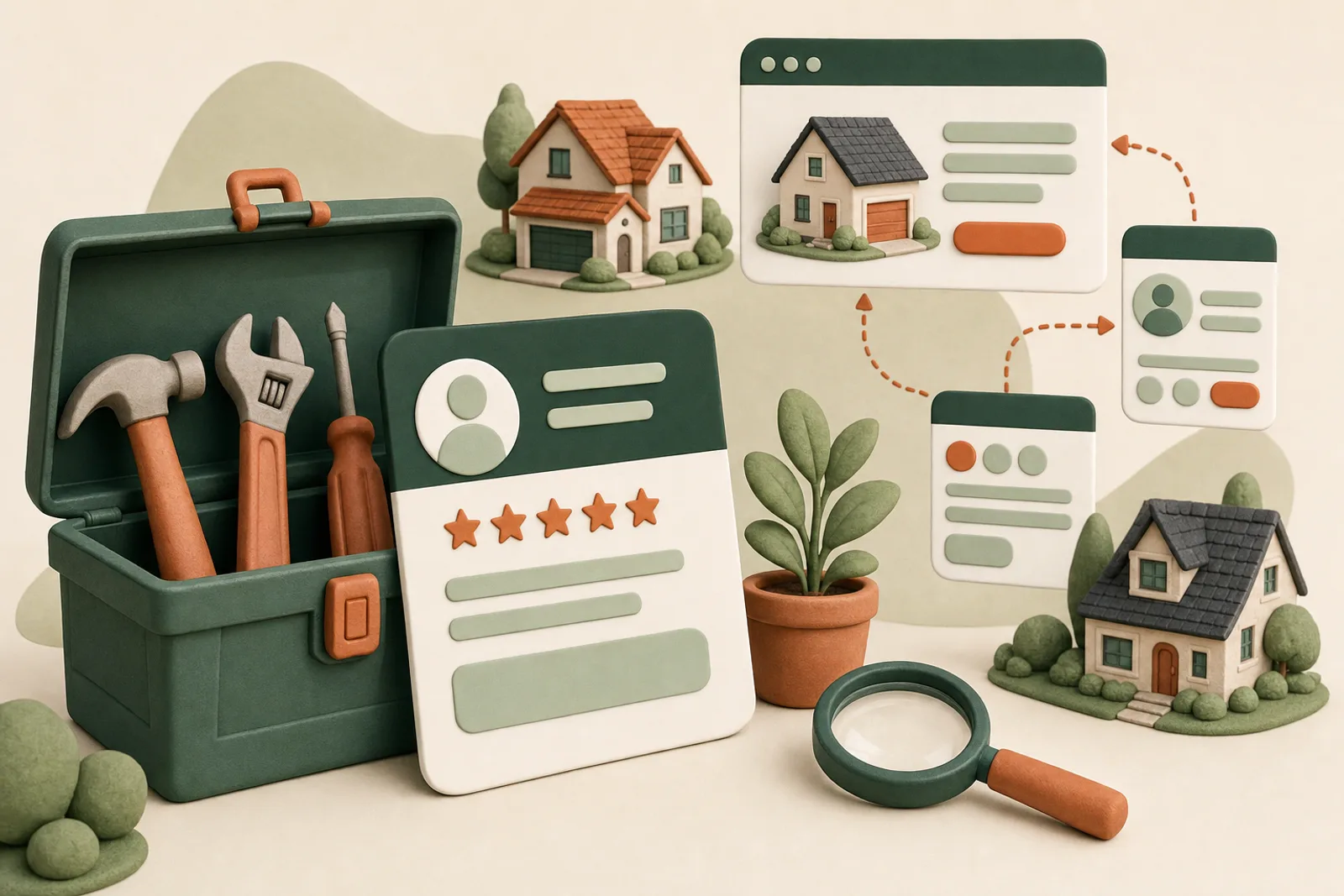

Most agencies will not tell you this, so I will: a meaningful chunk of roofing SEO is free, owner-doable, and requires no technical skill. I sell roofing SEO for a living and I am about to hand you the exact checklist, because a roofer who does the free foundations well is exactly the kind of company that eventually becomes a great client, ours or anyone’s.
Here is what to do yourself, in order of return, and the honest line where DIY stops making sense.
Job 1: Your Google Business Profile, done to spec
The map pack runs on your Business Profile, and Google publishes the rules. Thirty careful minutes covers it:
- Exact real business name. Not “Smith Roofing | Best Roofer in Dallas.” Google’s guideline: the name “should reflect your business’s real-world name.” Stuffed names get suspended.
- Service-area setup. Most roofers serve customers at their homes, and Google’s rule for that: one profile for your central location “with a designated service area.” If customers do not visit your shop, hide the address. And no rented mailbox addresses: a virtual office “isn’t eligible for a Business Profile.”
- Categories, minimal and true. “Roofing contractor” primary, then only what you actually do. Google’s own advice: “use as few categories as possible.”
- Every field filled. Hours, phone, services, description, and real photos of real jobs. BrightLocal’s search behavior research found 85% of consumers consider visible contact info and hours important, and about 1 in 5 local searches starts directly in a maps app. This profile is your storefront.
Job 2: The review habit
The single most valuable marketing habit a roofing company can build costs nothing. The 2026 numbers are thresholds homeowners actually apply: 97% read reviews, 31% will only use a 4.5+ star business, 47% skip anyone with fewer than 20 reviews, and 74% only trust reviews from the last three months.
That last stat is the one owners miss. Forty reviews from 2023 read as a business that stopped trying. The habit that wins:
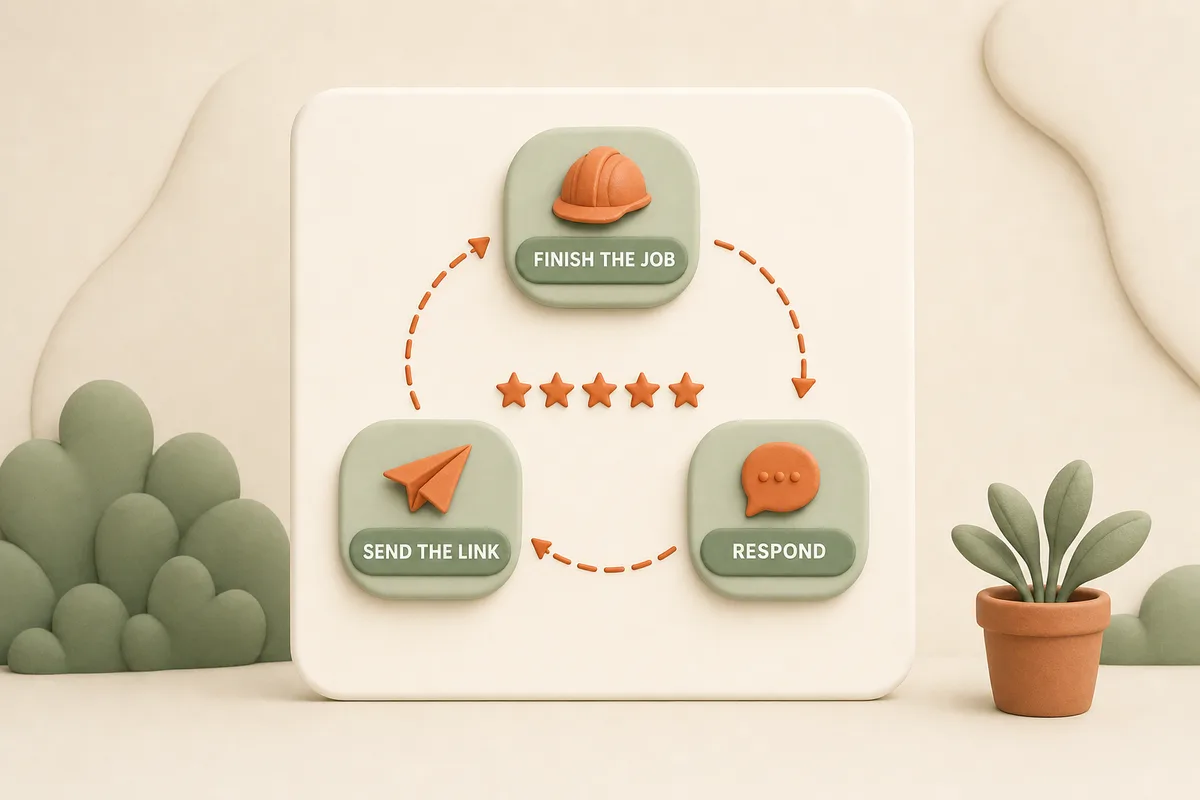
- Every completed job gets a review ask, same day, by text, with the direct Google review link.
- Make it the crew lead’s checklist item, not a someday task.
- Respond to every review, good and bad. An owner response is a top-five trust factor in the same survey, and it is visible effort your competitors will not match.
A steady two or three reviews a month beats a blitz of thirty and then silence, forever.
Job 3: Listing accuracy everywhere
Boring, free, and quietly expensive to skip: SOCi’s consumer research found 63% of consumers have encountered inaccurate local listings, and 47% would switch to a competitor over it.
The DIY version takes an afternoon: search your business name, list every place it appears (Google, Yelp, Facebook, BBB, Angi, the local chamber, old directories), and make the name, address, phone, and hours match everywhere. Wrong number on a directory you forgot exists means calls you never knew you missed.
Job 4: See what Google already almost gives you
Google Search Console is free, takes minutes to connect, and answers the most useful question in SEO: which searches does your site already appear for, and where? Any query where you sit on page two is a near-win: usually one better page or a handful of internal links from ranking to producing calls.
Pair it with Google Keyword Planner for local volumes and our free roofing keywords tool for the industry map with difficulty scores. Those three tools are the entire research stack an owner needs; the method for using them is in how to choose keywords for your roofing company.
Job 5: Basic pages that match real searches
You do not need to be a writer to fix the most common roofing website mistake: one “Services” page trying to rank for everything. The DIY structure, per the keywords data: one page per service you actually sell (repair, replacement, storm damage at minimum), each with the city in the page title, plain answers to what homeowners ask, real photos, and your phone number everywhere.
Write like you talk to homeowners on a roof. That plain-spoken version outranks and outconverts the keyword-stuffed robot version every time.
Where DIY stops paying
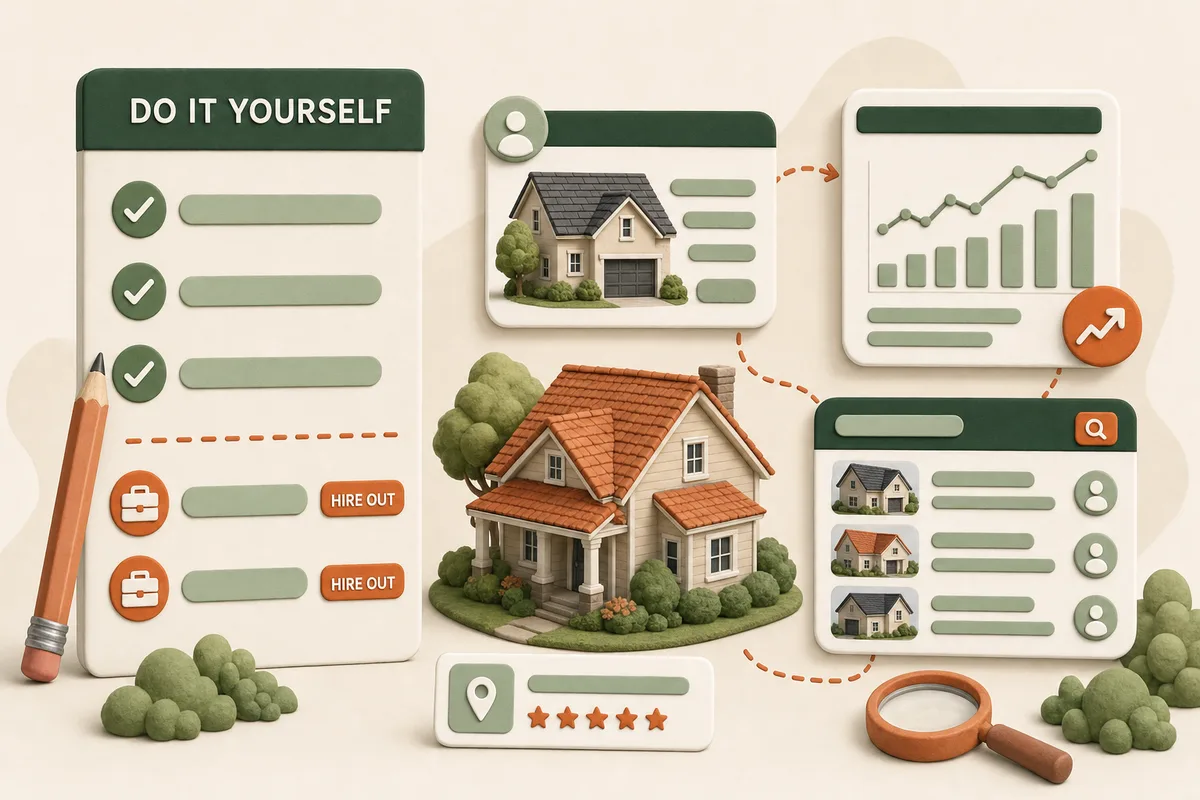
Now the honest part. Everything above is setup: do it once, maintain it lightly, collect the return. What remains is production, and production is where DIY quietly dies:
- Content at scale. City pages, cost guides, storm content, and the refresh cycle that keeps them ranking. This is hours every week, forever.
- Technical upkeep. Speed, crawlability, schema, and the things that break silently until the phone slows down.
- Links. Supplier directories and the chamber are DIY-able; the ongoing local PR and outreach grind is not, realistically.
- Tracking. Without call tracking and form attribution you are guessing at what works, and guessing compounds too.
The test is not skill, it is opportunity cost: an owner’s hour spent on an estimate or on a roof is worth hundreds of dollars; the same hour fighting a page builder is worth whatever the page builder decides. When the free foundations are done and growth needs weekly production, that is the handoff line.
When you reach it, go in armed: what roofing SEO should cost, and the 10 questions that expose the wrong agencies. Full disclosure of our own answer: one flat plan, everything included, built for companies past the DIY stage.
Start this week
Profile to spec today. Review habit starts with your current job. Listings audit this weekend. Search Console connected by Monday. That sequence, done with a roofer’s diligence, beats what half the “SEO packages” on the market actually deliver.
And if you want to know exactly where your company stands before you spend a single hour, get a free audit. I will check your profile, your reviews, your listings, and your rankings against your top three competitors, and give you the prioritized list, whether you ever hire anyone or not.
Frequently asked questions
- Can I do SEO for my roofing company myself?
- The foundations, absolutely: claiming and completing your Google Business Profile, building a review habit, fixing listing accuracy, and writing basic service pages are all owner-doable and free. That work alone puts you ahead of most competitors. The production side (content at scale, technical upkeep, link building, tracking) is where owners run out of hours.
- What free tools do I need for DIY roofing SEO?
- Four cover it: your Google Business Profile for the map pack, Google Search Console to see the queries your site appears for, Google Keyword Planner for local search volumes, and our free roofing keywords tool for the industry-wide picture with difficulty scores. All free, no agency required.
- How many reviews does a roofing company need?
- Treat 20 recent reviews at a 4.5+ average as the working minimum. BrightLocal's 2026 survey found 47% of consumers will not use a business with fewer than 20 reviews, 31% will only use one rated 4.5 stars or higher, and 74% only care about reviews from the last three months. Recency matters as much as the total, which is why a per-job habit beats a one-time push.
- When should a roofer hire an SEO agency instead of doing it themselves?
- When the checklist shifts from one-time setup to weekly production, roughly the point where you need regular content, technical monitoring, link building, and proper lead tracking to keep growing. If your hour is worth more on a roof or an estimate than at a keyboard, and the free foundations are done, that is the handoff point.
Read more

Why your roofing website isn't getting leads (a 15-minute diagnosis)
The seven failure points that silence a roofing website, in the order to check them, with the homeowner behavior data that explains each one.
What to expect from roofing SEO, month by month
The honest timeline nobody puts in the proposal: what actually happens in months 1 through 12 of a roofing SEO engagement, what to measure, and when to worry.