
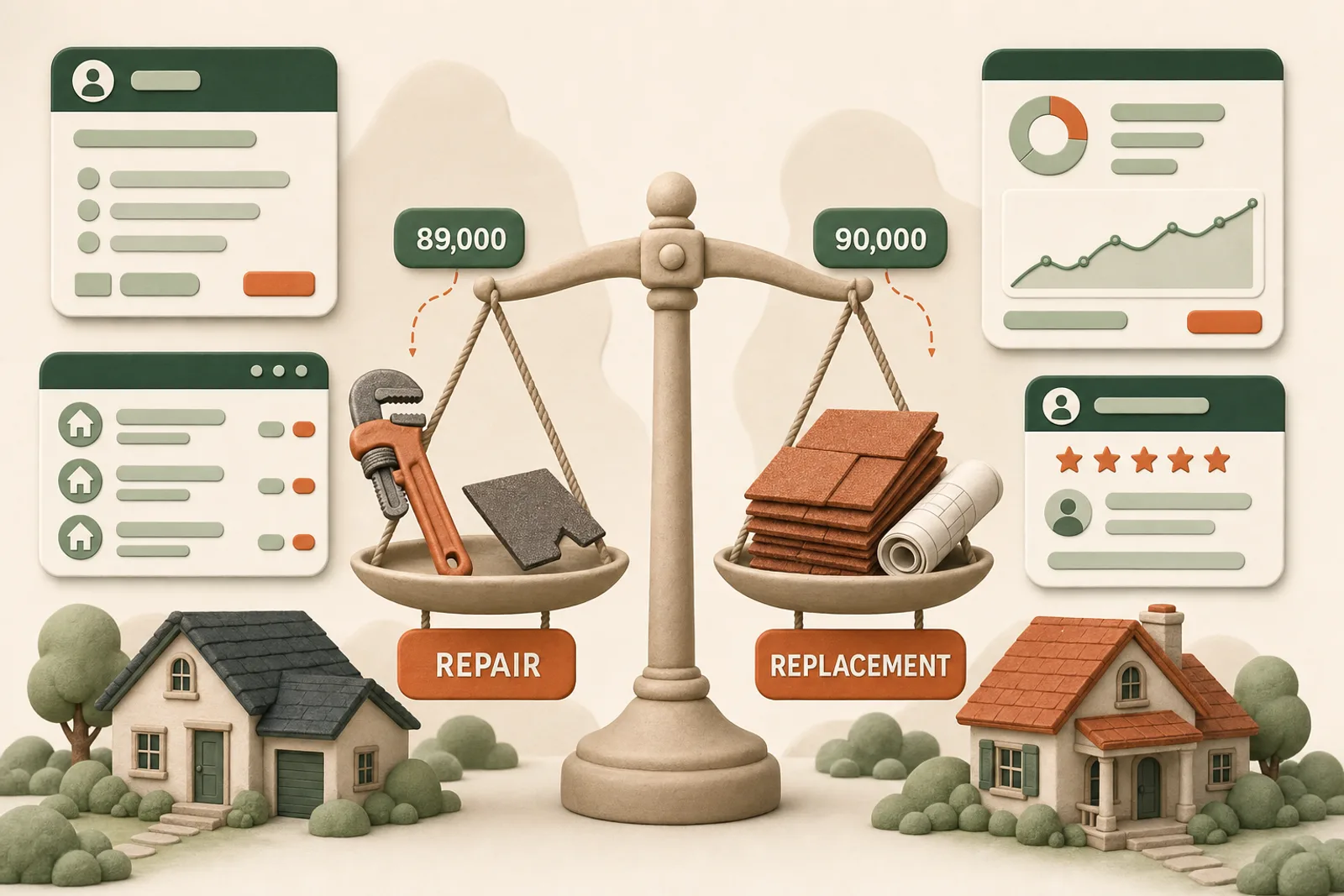

Here is a number pairing that should change how you think about your website: in our 245-keyword dataset, “roof repair” pulls 89,000 US searches a month and “roof replacement” pulls 90,000. Two markets, statistically the same size.
Everything else about them is different: the customer’s state of mind, the money, the competition, and the pages that win them. Most roofing websites are accidentally built for only one. This post is about doing it on purpose.
Two markets wearing one trench coat
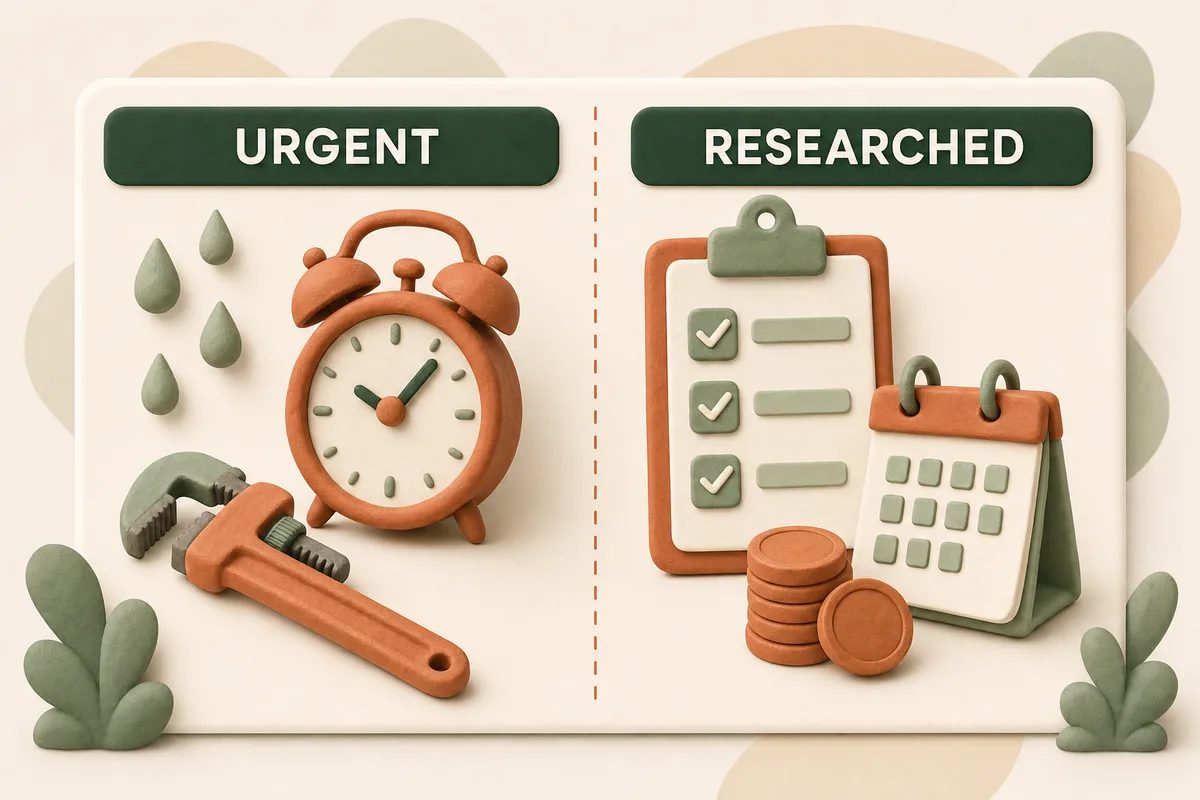
The repair searcher has a problem right now. Water is coming in, shingles are on the lawn, the ceiling has a stain that was not there last week. The biggest repair terms in our data: “roof repair” (89,000/month), “roof repair near me” (67,000), “roof leak repair” (23,000), “emergency roof repair” (14,000), “flat roof repair” (11,000). Add the pure-urgency cluster: “emergency roof repair near me” at 6,900, most of it mobile, most of it after business hours.
The replacement searcher has a project. They are weeks or months from a decision worth an average of $10,000. Their terms: “roof replacement” (90,000), “roof replacement near me” (27,000), “roof replacement cost” (18,000), “how much does a new roof cost” (6,600). Notice the cost questions: replacement searchers research prices before they ever call anyone.
Same phone, same homeowner even, but a different person depending on the day. Your website has to greet both.
The difficulty gap is your opening
Volume is only half the data. The other half is how hard each term is to rank for, and here the two markets split dramatically.
In our dataset, the repair side is nearly uncontested: “roof repair” scores a ranking difficulty of 0, “roof leak repair” scores 1, “emergency roof repair” 0, “flat roof repair” 0. The replacement side runs harder: “roof replacement” scores 11, “roof replacement cost” 25, and the provider terms roofers obsess over (“roofing contractor” at 60, “roofer near me” at 43) are the hardest in the set.
The logic is straightforward: everyone chases the five-figure replacement keywords and the “near me” provider terms, while the enormous repair market sits comparatively open. For a newer site, repair terms are usually the fastest path to the first page and the first organic calls. We walk through how to weigh volume against difficulty in how to choose keywords for your roofing company.
The economics: why you want both anyway
The obvious math says chase replacements: one $10,000 job beats a $1,200 repair. The roofer’s math is sneakier, and better:
Repair jobs are replacement leads with a close rate of one. The homeowner who calls you for a leak has invited you onto their roof. Some meaningful share of repair visits end with “honestly, this roof has three years left,” and now you are the trusted contractor already standing on the evidence when the replacement conversation starts. No ad platform sells that introduction.
Repair fills the calendar between big jobs. Fast close cycles, high urgency, minimal comparison shopping. The searcher with water coming in is not collecting five bids.
Replacement pays for everything. Slower, choosier, and worth the wait, especially since the cost-question keywords let you reach these homeowners while they are still researching, before your competitors know they exist.
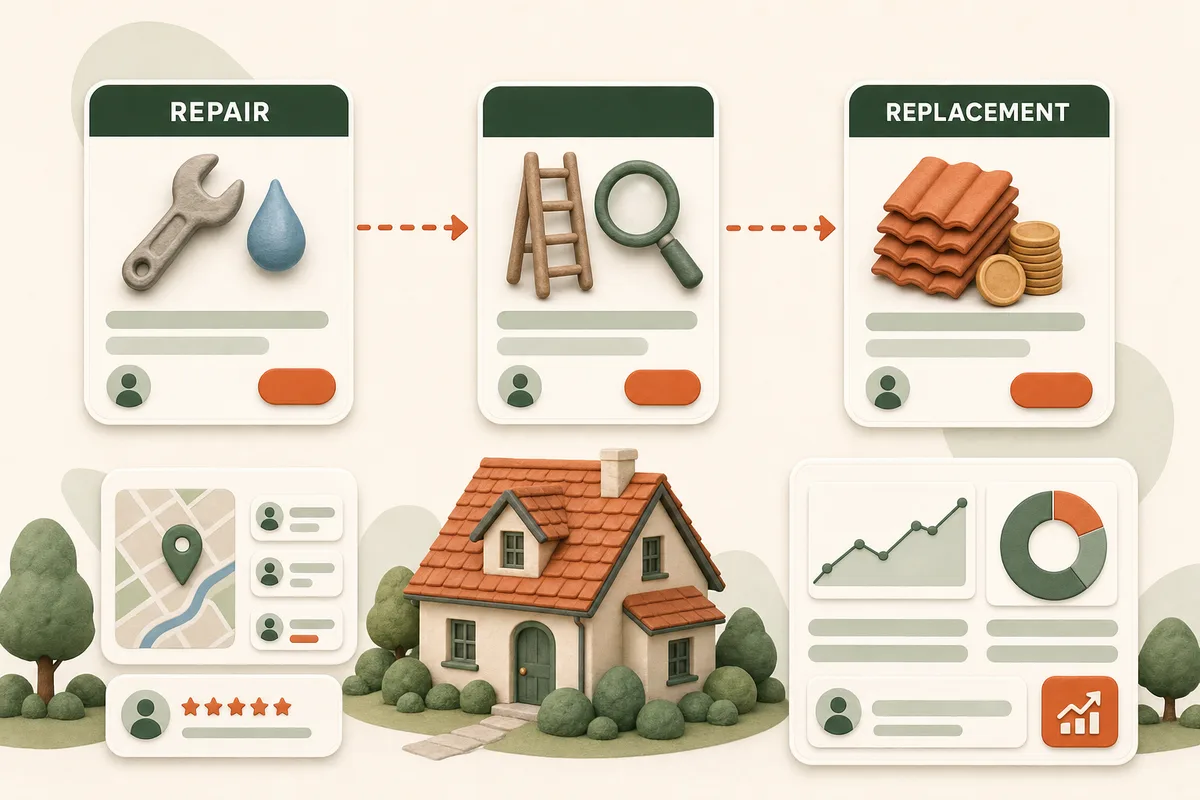
A site that captures both runs a pipeline: repair urgency feeds work in today, replacement research feeds the jobs that make the year.
Do not forget the storm cluster
Between repair and replacement sits the category that behaves like both: storm damage. “Storm damage roof repair” (6,200 monthly searches, difficulty 0), “hail damage roof repair” (4,200, difficulty 0), “roof storm damage” (3,700), and the insurance question worth its own page: “how to get insurance to pay for roof replacement” (2,700, difficulty 5).
Storm keywords have repair urgency and, when insurance approves a reroof, replacement economics. They are also the pages you must build before the storm, since the week after hail is the wrong week to start writing. Every roofer who handles insurance work should own these terms in their market; almost none do.
Building the pages: one intent, one page
The practical playbook, using the structure logic from the keywords guide:
- A repair page targeting “roof repair [city]” and its variants, written for urgency: prominent phone number, emergency availability, response time, photos of real repair work. If you do emergency work, a dedicated emergency page too, because “emergency roof repair near me” is its own search with its own 2 a.m. mindset.
- A replacement page targeting “roof replacement [city]”, written for research: materials, process, timelines, financing, warranties, and real completed projects.
- A cost page or post for “roof replacement cost” intent. The homeowner asking about price is early in the journey; answer honestly and you become the trusted name for the next three months of their research.
- Storm and insurance pages if you do that work, built in the off-season.
Each page targets its own intent, links to its siblings, and routes to one action: call or request an inspection. What those pages need to look and load like is covered in our web design breakdown, and how they fit the whole system is in the complete roofing SEO guide.
The takeaway
Repair and replacement are equal-sized search markets with opposite personalities: one urgent, huge, and nearly uncontested; one researched, competitive, and worth five figures a job. Build for both deliberately, add the storm cluster if you touch insurance work, and your website stops being a brochure and starts being a routing system for every kind of roofing customer in your area.
Want to know which of these markets your site currently captures, and which it hands to competitors? Get a free audit. I will show you exactly which repair, replacement, and storm terms you rank for in your market, and where the fastest wins are.
Frequently asked questions
- Should my roofing website target repair keywords or replacement keywords?
- Both, on separate pages. They are nearly equal in search volume (89,000 vs 90,000 US monthly searches for the head terms in our dataset) but represent different customers in different moments. A site that only targets one is invisible to half its market, and repair visits regularly turn into replacement sales once you are on the roof.
- Why are repair keywords easier to rank for than replacement keywords?
- In our 245-keyword dataset, most repair and emergency terms carry ranking difficulty scores at or near zero while replacement terms run higher, up to 25 for 'roof replacement cost'. Replacement keywords attract more competition because each job is worth five figures, so more roofers and national directories fight for them.
- What are storm damage keywords and who should target them?
- Terms like 'storm damage roof repair' (6,200 monthly searches) and 'hail damage roof repair' (4,200), both at near-zero difficulty in our data. Any roofer who handles insurance work should build these pages before storm season, because they combine repair urgency with replacement-sized jobs when insurance approves a full reroof.
- How do I find the search volumes for keywords in my own market?
- National volumes divide roughly by population share, but the fastest gut check is our free roofing keywords tool, which lists 245 terms with US volume and difficulty. For your specific market, Google Keyword Planner gives localized volumes and Google Search Console shows the queries your site already appears for.
Read more

Why your roofing website isn't getting leads (a 15-minute diagnosis)
The seven failure points that silence a roofing website, in the order to check them, with the homeowner behavior data that explains each one.

What to expect from roofing SEO, month by month
The honest timeline nobody puts in the proposal: what actually happens in months 1 through 12 of a roofing SEO engagement, what to measure, and when to worry.